In the world of Amazon Vendor Central & Seller Central operations, revenue leakage is more common than most brands realise.
One of the biggest silent profit killers?
Amazon Shortage Claims
If you are a manufacturer, distributor, or vendor supplying products to Amazon, you may already be losing thousands, sometimes even lakhs, in recoverable revenue due to shortages, chargebacks & receiving discrepancies.
At RootAMZ, we regularly audit accounts where brands are unknowingly writing off legitimate claims simply because they lack structured reconciliation processes.
In this guide, we’ll break down:
- What Amazon shortage claims are
- Why they happen
- How to file them properly
- How to recover lost revenue
- And how RootAMZ protects your margins strategically
Let’s dive in.
What Are Amazon Shortage Claims?
Amazon shortage claims occur when Amazon reports that fewer units were received than what was shipped & deducts the cost from your invoice or payment.
This is especially common in:
- Vendor Central accounts
- Large PO shipments
- Cross-dock logistics
- High-volume replenishment cycles
For example:
You ship 1,000 units against a purchase order.
Amazon records receiving only 920 units.
The remaining 80 units are marked as “shortage.”
Unless disputed properly, that revenue is lost.
Multiply this across multiple POs & the financial impact becomes significant.
Why Do Shortage Claims Happen?
Shortage claims are not always fraudulent or malicious. They typically occur due to:
- Receiving center miscounts
- Carton labelling errors
- Pallet configuration mismatches
- EDI discrepancies
- Damaged shipments during transit
- Carrier documentation gaps
However, the critical issue is this:
If you do not monitor & dispute these claims within the allowed timeframe, the money is permanently deducted.
That’s why structured Amazon account management is non-negotiable.
The Financial Impact of Ignoring Shortage Claims
Many vendors treat shortage claims as “operational noise.”
That is a mistake.
Let’s break it down practically:
- 2%-5% shortage rate on large POs
- ₹50 lakh annual Amazon business
- Even a 2% unclaimed shortage = ₹1 lakh lost revenue
And this doesn’t include:
- Chargebacks
- Pricing discrepancies
- Freight deductions
- Operational compliance penalties
Shortage claims are often just one part of a broader revenue recovery system.
At RootAMZ, we approach Vendor Central operations with a profit protection mindset.
How to File Amazon Shortage Claims (Step-by-Step)
Recovering shortage claims requires documentation, timing & precision.
Here’s the structured approach:
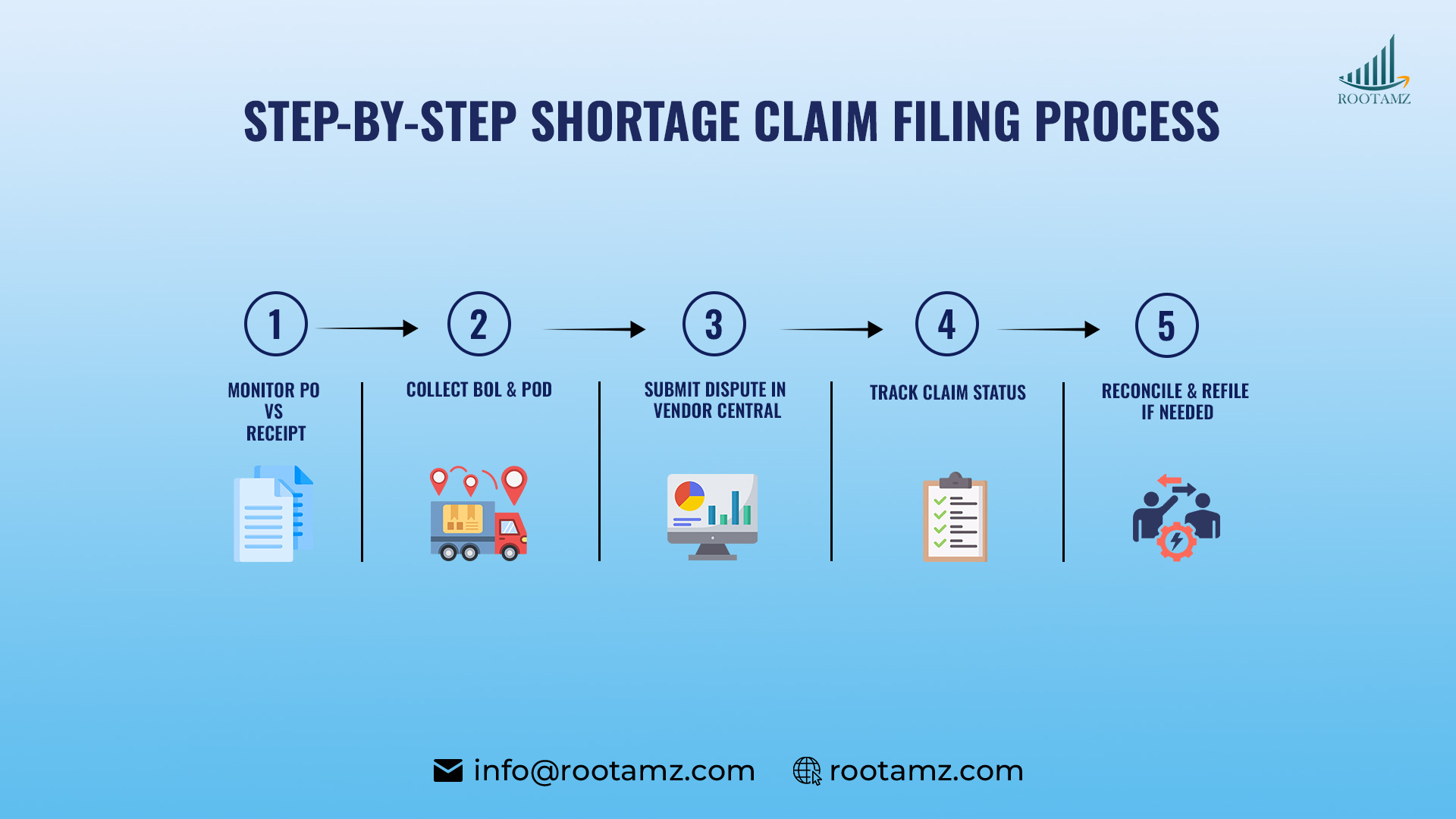
1.Monitor Purchase Orders & Receipts
Track:
- PO issued quantity
- ASN (Advance Shipment Notice)
- BOL (Bill of Lading)
- Proof of Delivery (POD)
- Invoice quantity
- Received quantity
Mismatch = Claim opportunity.
2.Collect Required Documentation
Amazon typically requires:
- Signed BOL
- Carrier POD
- Packing list
- Invoice
- Shipment tracking details
- ASN confirmation
Without complete documentation, claims get denied.
3.File Claim in Vendor Central
Navigate to:
Operational Performance → Shortage Claims → Dispute Claim
Attach documentation clearly & concisely.
Be precise in your explanation.
4.Track Claim Status
Claims may show:
- Open
- Under Review
- Approved
- Denied
Denied claims often require re-submission with additional documentation.
5.Maintain Reconciliation Reports
Manual tracking in spreadsheets is inefficient.
Professional account management requires:
- Weekly reconciliation audits
- Claim aging reports
- PO-level tracking
- Recovery ratio analysis
This is where most vendors fail, not in filing claims, but in building a system.
Common Mistakes Vendors Make
🚫 Filing claims without full documentation
🚫 Missing dispute deadlines
🚫 Not reconciling at PO level
🚫 Ignoring partial shortages
🚫 Accepting invalid denials
🚫 No internal audit mechanism
Amazon operations are process-driven. Emotional appeals do not work. Structured documentation does.
Seller Central vs Vendor Central Shortages
Shortage issues differ slightly depending on your model.
Vendor Central:
- PO-based shortages
- Invoice deductions
- Chargeback recoveries
- Bulk shipment discrepancies
Seller Central (FBA):
- Inventory lost in fulfillment centers
- Damaged inventory
- Customer return discrepancies
- Removal order losses
Both require consistent monitoring.
RootAMZ handles reconciliation for both ecosystems under a centralised recovery framework.
Why Most Brands Fail at Revenue Recovery
The biggest problem isn’t Amazon.
It’s lack of internal structure.
Brands often:
- Don’t assign ownership
- Lack operational SOPs
- Don’t analyse recurring patterns
- Treat recovery as reactive instead of proactive
Revenue recovery is not an occasional task. It is a recurring operational discipline.
The RootAMZ Revenue Recovery Framework
At RootAMZ, shortage claim recovery is part of a broader operational management system.
We don’t just file claims. We build safeguards.
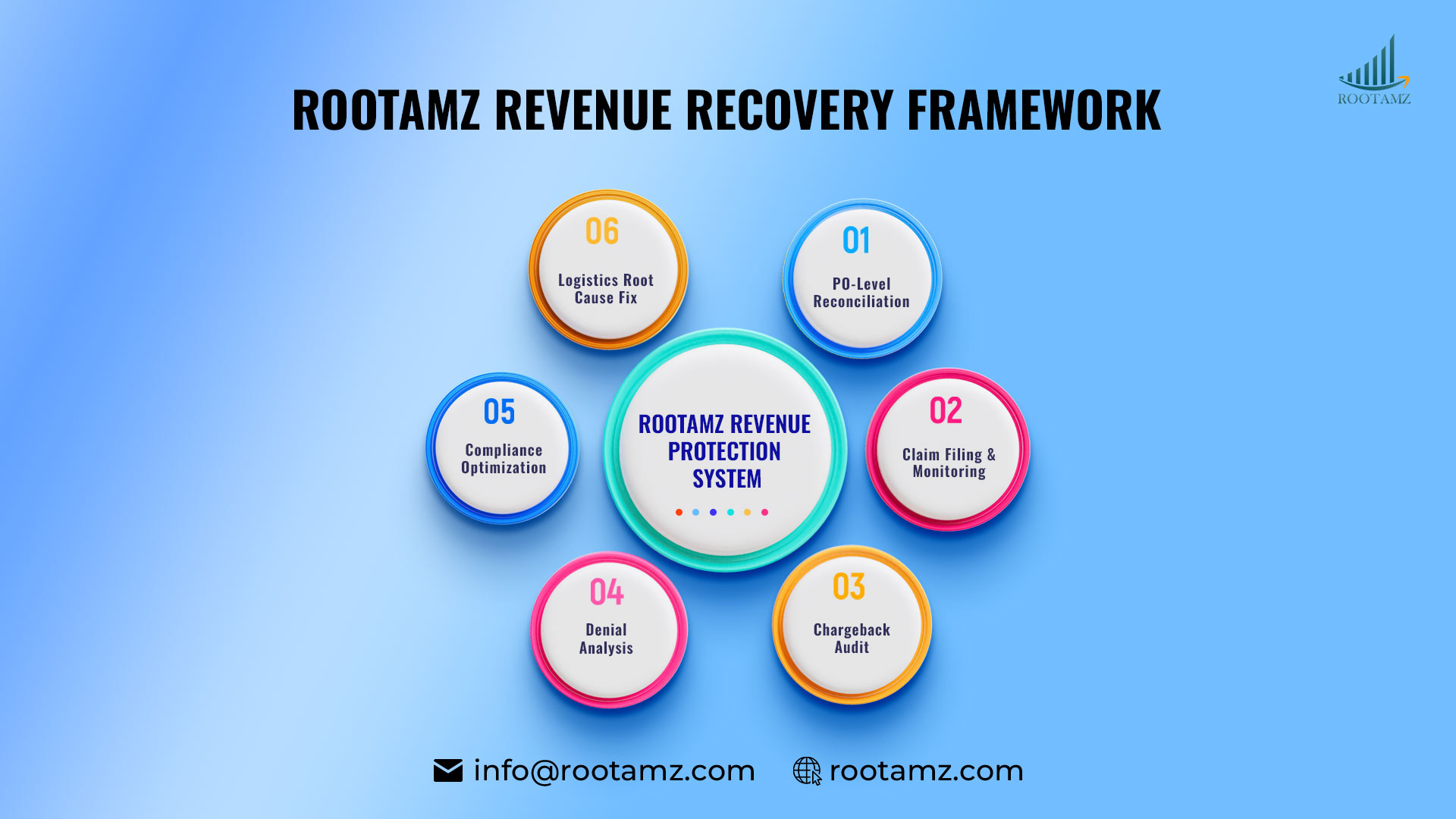
Our framework includes:
✔ PO-level reconciliation
✔ Automated shortage detection
✔ Claim filing & re-filing
✔ Denial analysis
✔ Chargeback audits
✔ Compliance improvement strategy
✔ Logistics process refinement
More importantly:
We identify root causes to reduce future shortages.
Because real profitability comes from prevention + recovery.
Strategic Advantage: Beyond Just Filing Claims
Recovering shortage claims improves:
- Net margin
- Vendor scorecard performance
- Cash flow management
- Forecasting accuracy
- Negotiation leverage with Amazon
When Amazon sees clean operational metrics, it improves vendor credibility.
That directly impacts:
- Purchase order volume
- Terms negotiation
- Growth opportunities
This is why Vendor Central management cannot be handled casually.
When Should You Contact RootAMZ?
If you are experiencing:
- Unexplained invoice deductions
- Increasing shortage percentages
- Frequent claim denials
- Lack of reconciliation reports
- No structured Vendor Central management
It’s time for expert intervention.
RootAMZ works with:
- Manufacturers
- Distributors
- National brands
- Global vendors
We manage the complete Amazon ecosystem, from listings & advertising to logistics reconciliation & compliance optimisation.
Shortage recovery is just one component of protecting your total Amazon profitability.
Final Thoughts: Protect What You Earn
Selling on Amazon is not just about generating revenue.
It’s about protecting it.
Every shipment you dispatch represents cost, logistics effort & capital investment. If shortages go unclaimed, you are subsidising operational inefficiencies.
Amazon shortage claims are recoverable, but only when handled systematically.
If Amazon contributes significantly to your annual turnover, you cannot afford revenue leakage.
Reach out to RootAMZ & let our Vendor Central specialists build a structured revenue recovery system for your business.
FAQ’s
What is an Amazon shortage claim?
An Amazon shortage claim occurs when Amazon reports receiving fewer units than shipped & deducts payment for the missing units.
How long do I have to dispute a shortage claim?
Dispute windows vary, but generally claims must be filed within a limited timeframe after the deduction appears. Timely reconciliation is essential.
What documents are required to file a shortage claim?
Typically:
- Signed Bill of Lading (BOL)
- Proof of Delivery (POD)
- Invoice
- Packing list
- ASN confirmation
Can Seller Central FBA sellers also recover lost inventory?
Yes. FBA sellers can file reimbursement claims for lost or damaged inventory within Amazon fulfillment centers.
How does RootAMZ improve shortage recovery success rates?
RootAMZ uses structured PO-level reconciliation, complete documentation tracking, claim monitoring, denial analysis & compliance optimization to increase approval rates & reduce future shortages.