For years, Amazon sellers asked one question: which keywords get me ranked higher?
That still matters. But in 2026 it's only part of the job.
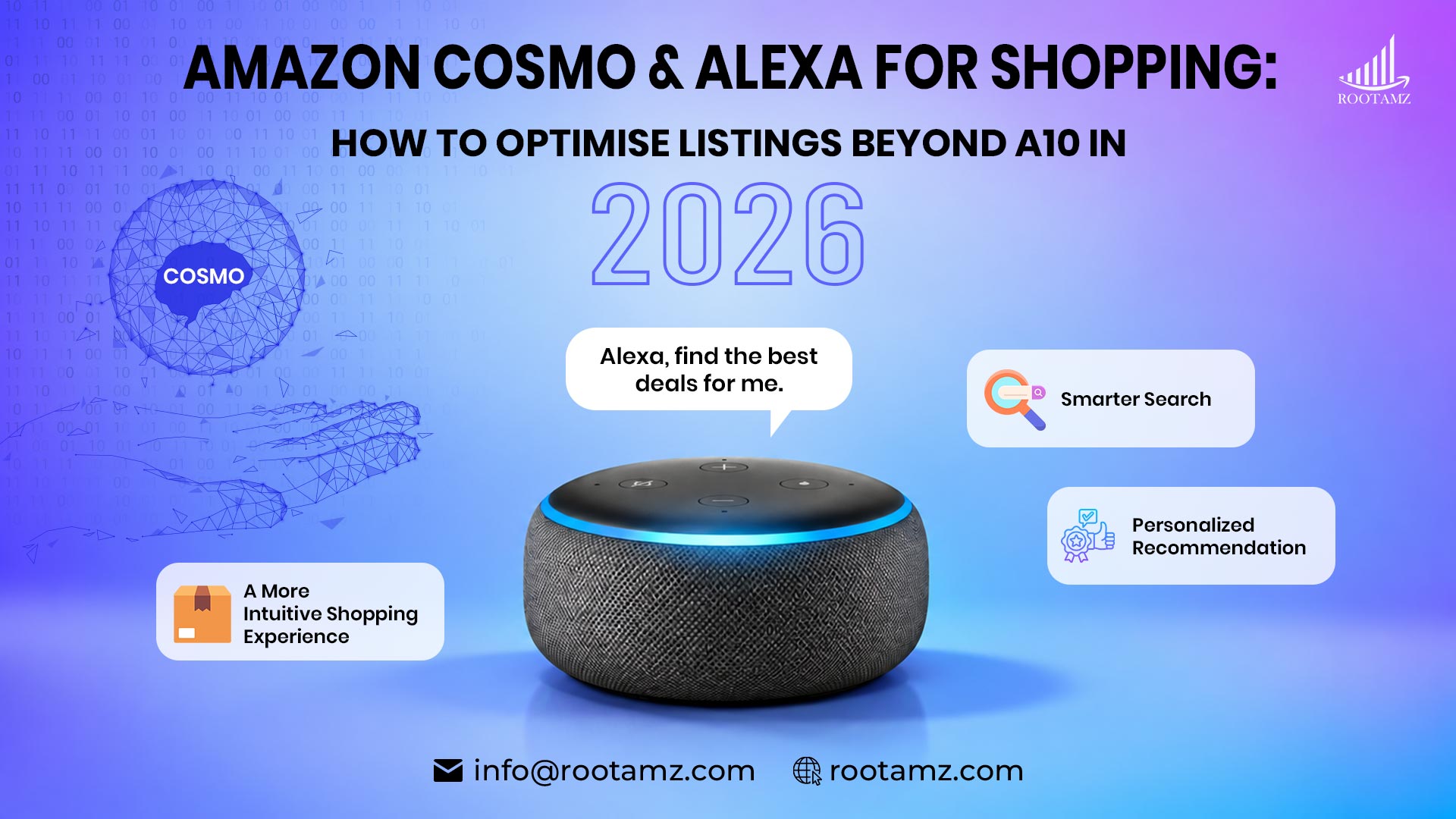
Shopping on Amazon is turning conversational. Amazon merged its Rufus assistant with Alexa+ into Alexa for Shopping, so customers can ask questions in plain language get guidance right inside Amazon. Behind that sits COSMO Amazon's research into a common-sense knowledge system that pulls relationships out of customer behaviour, linking products to needs, audiences use cases instead of matching one keyword at a time.
The takeaway is simple. Your listing needs to be understandable, not just stuffed with terms. It should tell a customer the systems reading it what the product is, who it's for, what it fixes when to use it.
🚀 A9 vs COSMO: What Has Changed?
One thing first. Amazon doesn't publish how ranking works, so be wary of anyone selling you the "COSMO formula." It doesn't exist publicly.
What the research shows is a move toward systems that read context, not just words.
Old way: customer searches → keyword matches listing → product ranks.
New way: customer has a need → Amazon reads intent context → relevant products surface.
Say someone asks, "what's a good water bottle for long summer hikes?" The keyword-only approach jams in "water bottle, sports bottle, outdoor bottle" hopes. The stronger listing explains the product suits long hikes, hot weather active use with real detail.
So don't drop Amazon SEO. Upgrade it. The winning mix is keywords plus structured data plus clear content plus customer intent plus conversion.
⚠️ Why Keyword Stuffing Can Hurt Your Listing Strategy
Keyword stuffing was never good for customers.
A title like "Water Bottle Sports Bottle Gym Bottle Travel Bottle Leakproof Bottle" holds plenty of terms. But does it tell you anything? Not really. It burns space, reads badly gives shoppers no reason to buy.
People search differently now. They ask full questions. Is this okay for travel? Will it work for a beginner? What's it made of? Your listing should answer those.
Optimise for meaning instead say what the product is, who it's for, how it's used, which features solve a real problem, any limits.
❌ "Ergonomic Mouse Wireless Mouse Office Mouse Computer Mouse"
✅ "Wireless ergonomic mouse built for comfortable, all-day computer use."
The second still gives a clear signal. It just reads like a human wrote it.
🔍 The Listing Fields That Matter: Start With Structured Product Attributes
If sellers underrate one thing, it's structured data.
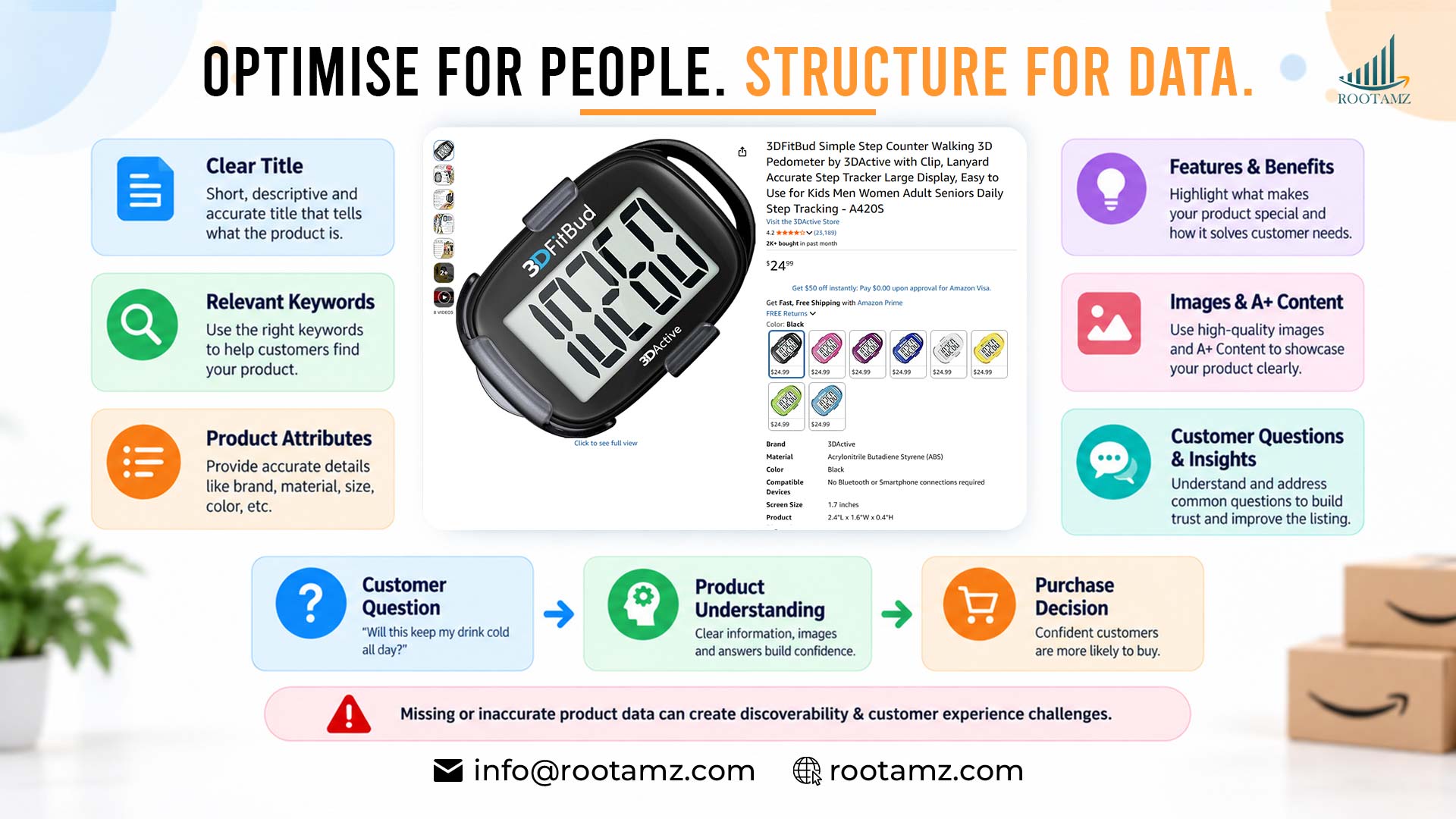
A listing is more than a title bullets. Depending on your category, you may have fields for material, colour, size, product type, intended use, target audience, compatibility technical specs. Those fields build a fuller picture that picture is what shopping systems lean on when they work out context.
Treat attributes as part of your SEO, not a form you fill in once. Audit them. Fill the gaps. Fix anything wrong. Make the data match the actual product. A great title can't cover for broken attribute data.
📝 Optimise Every Part of the Amazon Product Page
Think of the listing as one system.
Title identify the product clearly lead with what matters. Skip the repetition.
Bullet points tie features to real benefits, not just what's in the box.
Description & A+ Content answer the questions customers actually have, explain what sets the product apart.
Structured attributes fill every relevant field accurately.
Images show scale, use key features, within Amazon's rules.
Reviews & questions read them. They tell you what shoppers care about. Never buy or incentivise reviews.
🗣️ Alexa for Shopping: Optimise for Questions, Not Just Search Terms
The big change is the move from short searches to real questions. Amazon describes Alexa for Shopping as an AI experience where customers ask in everyday language keep going with follow-ups.
So ask yourself: what would a customer want to know before buying? Who's it for? What problem does it solve? What's it compatible with? What makes it different?
Then check your page. For every key ASIN, list the top five customer questions see if the listing covers them. Simple exercise. It usually exposes gaps keyword research misses.
📈 Don't Forget the Fundamentals: Relevance Still Needs Performance
AI shopping doesn't cancel the basics. A strong product still needs competitive pricing, accurate info, reliable stock, good conversion solid ads.
So don't chase every algorithm headline. There's no magic COSMO keyword no Alexa shortcut. Build accurate, customer-focused pages run clean operations. That's the long game.
🌟 How RootAMZ Helps Brands Optimise Beyond A10
We treat Amazon optimisation as a whole business, not a checklist.
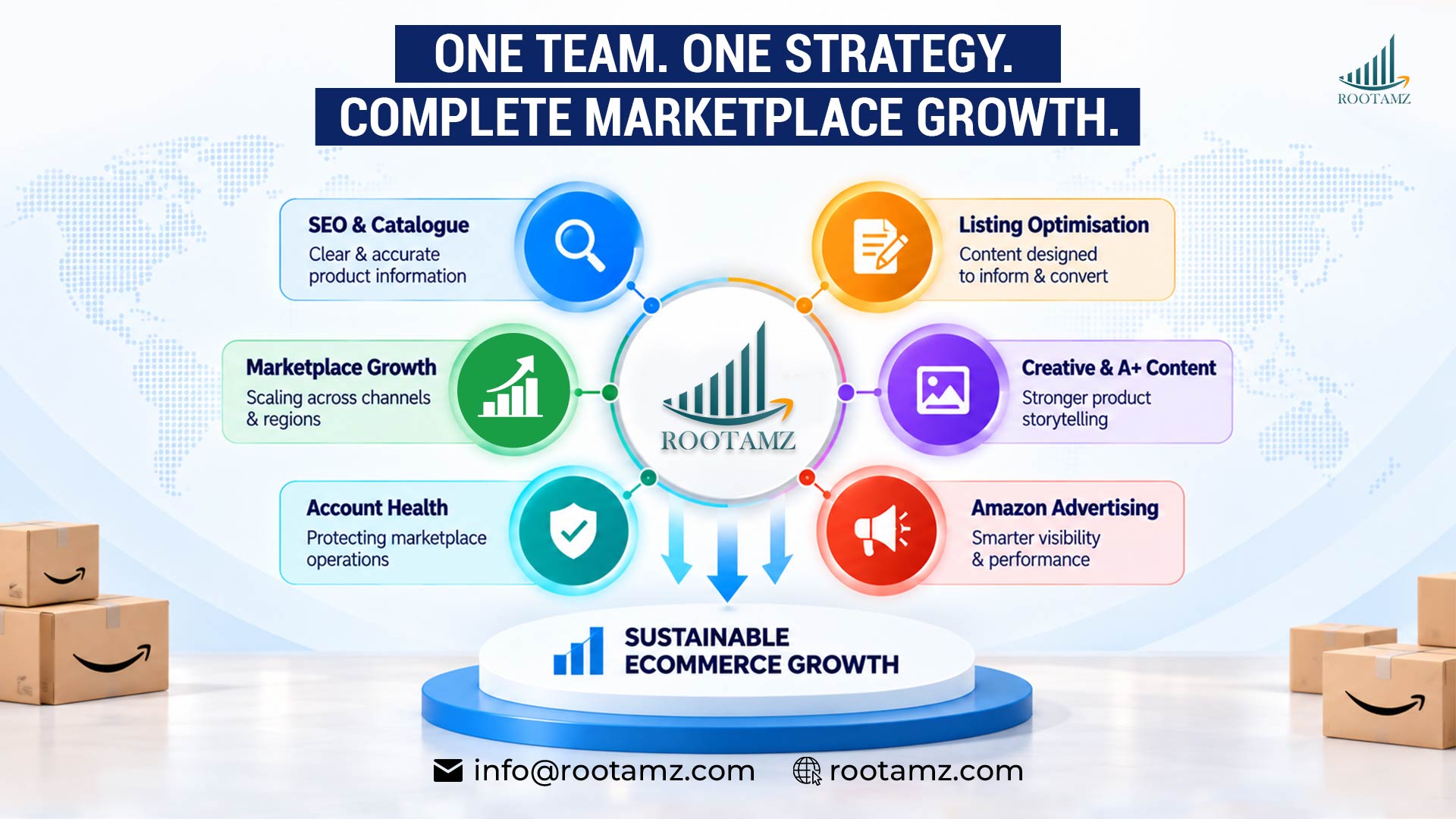
A listing can read beautifully still lose sales if it's out of stock. A sharp ad campaign wastes budget if the page doesn't convert. So we bring it together: SEO, listing optimisation, catalogue attribute management, images A+ Content, PPC, Account Health, inventory international growth. We're also an Amazon Ads Verified Partner, so our ad work sits alongside the catalogue side, not off on its own.
🚀 Final Thoughts
Adding more keywords isn't the strategy anymore. In 2026, think about intent, context, structured data, clear answers real conversion.
The sellers who prepare now will have clearer, more useful pages when everyone else is still catching up.
Not sure your listings are ready? Talk to us. We'll audit your catalogue, tighten your content find opportunities across your marketplace.
FAQ's
What is Amazon COSMO?
Amazon's research framework for building common-sense knowledge from shopping behaviour connecting products to needs real-world contexts to improve search recommendations.
Does COSMO replace Amazon's search algorithm?
There's no public basis for that. Amazon doesn't publish a ranking formula. Stick to SEO fundamentals while improving clarity, data relevance.
Does keyword stuffing still work?
Relevant keywords matter. Repeating them for the sake of it doesn't it reads badly hurts the customer experience.
Which area should I review first for AI-driven shopping?
Start with complete, accurate structured attributes. Then the title, bullets, description, A+ Content customer questions.
Can RootAMZ help optimise for Alexa for Shopping modern search?
Yes. We audit improve catalogue data, content, images, A+ Content ad strategy, tying it to real business growth.