One morning your Seller Central dashboard looks normal. By afternoon your listings are gone, your account is deactivated & Amazon is holding your funds. No warning. No phone number to call. Just a notification email & a deadline.
It's brutal. And in 2026 it's happening more often Amazon's AI enforcement is moving faster & flagging more accounts than it did even a year ago. The sellers who recover quickly are the ones who respond the right way from the start. The ones who don't often drag the process out for weeks, sometimes permanently.
Here's what actually works.
Know What You're Dealing With Before You Write Anything
This is the step most sellers skip & it's why most first appeals fail.
There are three types of suspension & each one needs a different response.
Performance-based suspensions happen when your metrics fall below Amazon's minimum thresholds Order Defect Rate above 1%, Late Shipment Rate above 4%, Pre-Fulfilment Cancellation Rate above 2.5%. These are the most straightforward to resolve because the cause is measurable & the fix is operational.
Policy violations cover a wide range inauthentic product complaints, IP claims, listing manipulation, review abuse, restricted products. Getting the diagnosis wrong here means your appeal addresses a problem Amazon didn't flag. That wastes time & signals to the reviewer that you still don't understand what happened.
Section 3 violations are the most serious. Fraud allegations, counterfeit claims escalated beyond standard complaints, related account connections, business verification failures. Reinstatement here demands extensive documentation & increasingly, a video verification call. If your suspension notice references Section 3, the standard appeal playbook doesn't apply.
Read the notification Amazon sent you carefully. The suspension type determines everything about how you respond.
Why Most Appeals Get Rejected
Amazon's Seller Performance team reads thousands of appeals. A vague, emotional one can drag the process out for weeks. A tight, structured one can get you reinstated in 24 to 48 hours.
The single most common mistake: writing about how the suspension has affected your business. Your livelihood, your team, how long you've been selling, how unfair it feels. Amazon doesn't care. What it's looking for is evidence that you understand what went wrong, that you've already fixed it & that it won't happen again.
Apologies don't work. Emotional appeals don't work. Only structured, evidence-backed Plans of Action work.
How to Write a Plan of Action That Gets You Back
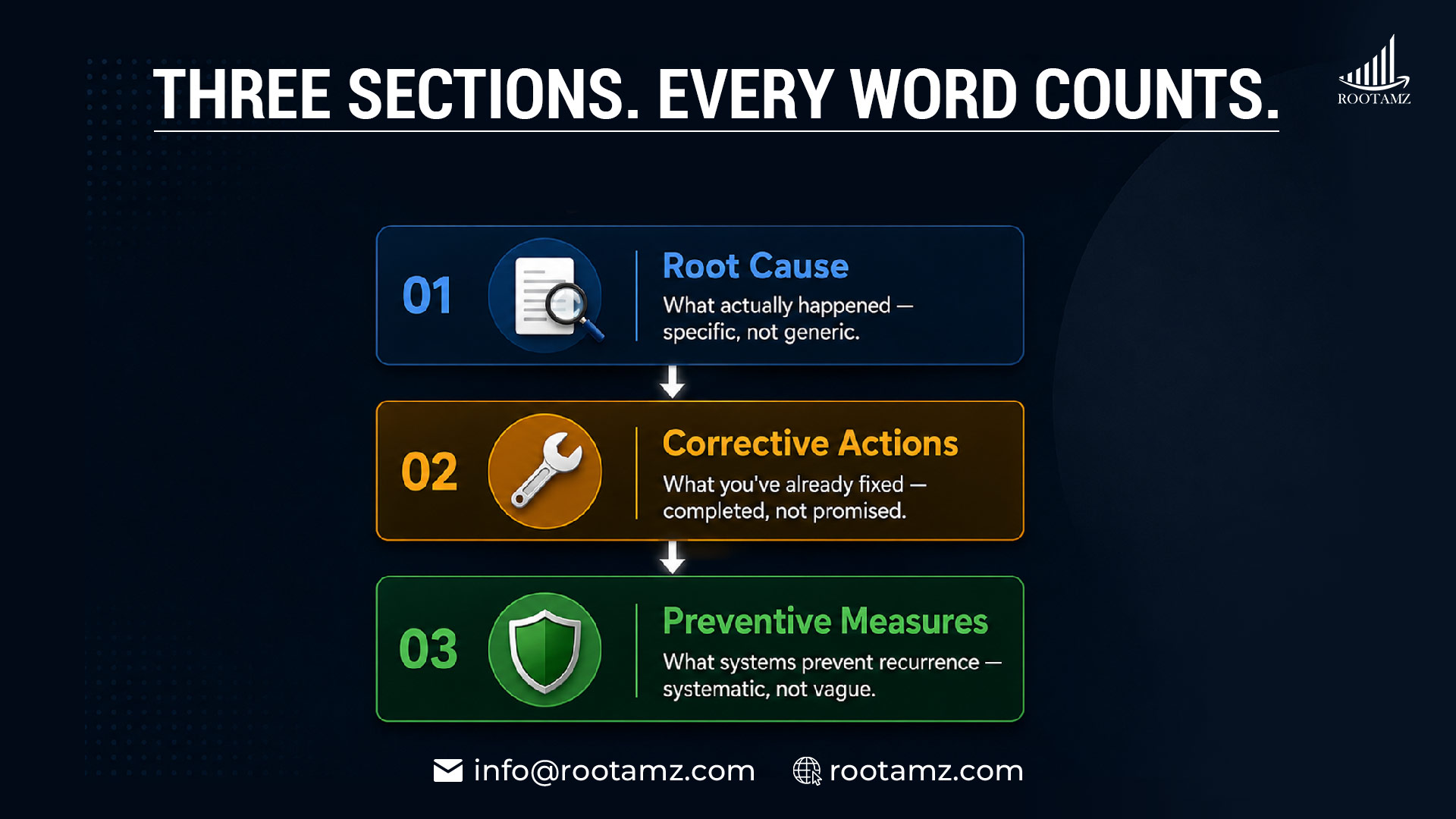
Three sections. Every word counts.
Root Cause. What actually happened not what sounds good. Was it a supplier sending inauthentic units? A metric that slipped during a high-volume period? A listing flagged for a keyword you didn't know was restricted? Be specific. "We failed to monitor our account health" tells Amazon nothing & signals you still haven't found the real problem.
Corrective Actions. What you've already done to fix it. Not what you plan to do what's done. Removed the listings. Got invoices from your supplier. Updated your returns process. Implemented a pre-dispatch quality check. Concrete completed actions, not intentions.
Preventive Measures. How it won't happen again. New supplier vetting process. Weekly account health reviews. A compliance checklist before any new ASIN goes live. The more specific & systematic, the more credible your appeal sounds.
Back it up with documentation wherever possible supplier invoices, order records, test purchase receipts. A Plan of Action with evidence behind it is a completely different document to one without.
After You Submit
Outside of Q4, most sellers hear back within 2 to 7 business days. If your appeal is rejected, read the response carefully Amazon usually signals exactly what was missing. Revise it & resubmit. A rejected appeal is not a closed door.
One thing to factor in early: depending on the violation, Amazon can hold your funds for up to 60 days. Plan for that from day one, not week three.
The Best Recovery Is Prevention
Most suspensions don't arrive without warning. Performance notices, verification requests, policy flags they show up in your Account Health dashboard before Amazon acts. If your account gets flagged as "at risk," suspension can follow within 7 to 14 days.
Check your Account Health dashboard weekly. Keep your metrics comfortably inside safe territory, not just within threshold. Keep supplier invoices on file for every ASIN. Audit your listings regularly against Amazon's Selling Policies the most common violations are ones sellers didn't know existed until they were flagged for them.
How RootAMZ Helps You Protect & Recover Your Account
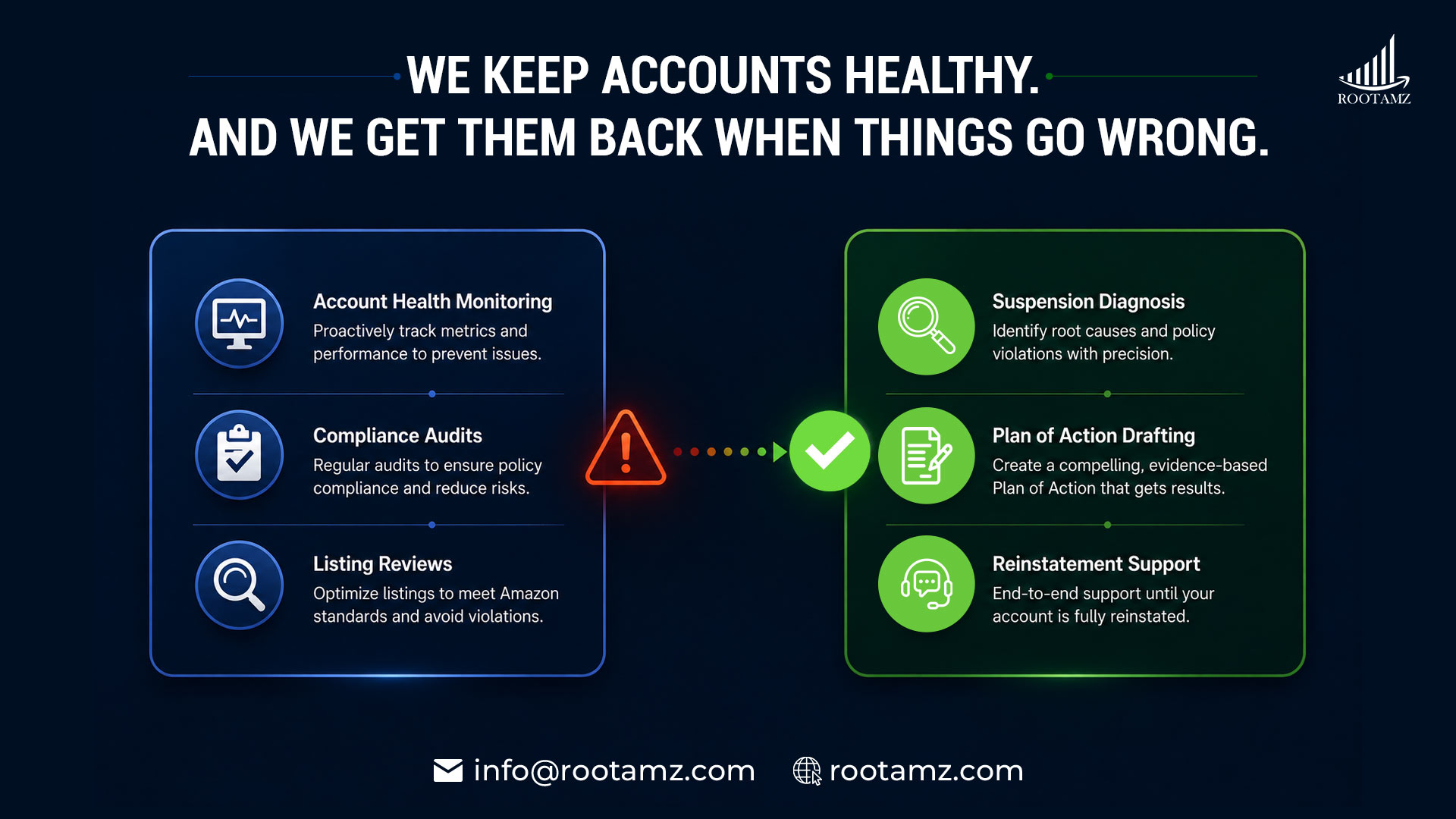
Navigating a suspension while running an ecommerce business is genuinely difficult — especially when every day offline costs you ranking & revenue. RootAMZ's Amazon Seller Central Management includes proactive account health monitoring designed to catch warning signs before they escalate. For sellers already suspended, we diagnose the root cause correctly & build a Plan of Action that addresses what Amazon is actually asking for.
Services RootAMZ Provides:
Amazon Seller Central Management — proactive account health monitoring, compliance checks & early warning escalation.
Suspension Appeal Support — root cause diagnosis, Plan of Action drafting & documentation support.
Amazon Listing Optimisation — compliance-led listing audits that reduce the risk of policy-triggered suspensions.
Amazon PPC Management — campaign continuity planning during account health issues.
Amazon Brand Registry Support — protecting your brand from third-party IP complaints before they become suspension triggers.
Ongoing Account Management — full operational oversight so performance metrics stay well inside Amazon's safe zones.
Whether you're currently suspended or want to make sure you never get there, RootAMZ brings the account management depth to keep your business protected.
FAQ's
How long does a suspension appeal take in 2026?
Outside Q4, most sellers hear back within 2 to 7 business days. A strong, well-structured Plan of Action can result in reinstatement within 24 to 48 hours. Vague or emotional appeals stretch the timeline significantly.
Can Amazon permanently suspend my account?
Yes. Repeated violations and Section 3 cases can result in permanent deactivation. Getting the appeal right on the first submission matters repeated poor-quality appeals reduce your chances with each round.
What is a Section 3 suspension?
A serious violation category covering fraud allegations, business verification failures, and related account issues. These require more extensive documentation than standard appeals and increasingly involve video verification calls with Amazon's team.
Should I appeal immediately or take time to prepare?
Amazon typically gives you 7 days to respond. Use that time to correctly diagnose the suspension type and write a proper Plan of Action rather than rushing a generic response. Speed matters less than accuracy on the first submission.
Can RootAMZ help write my Plan of Action?
Yes. RootAMZ helps sellers diagnose the root cause correctly and structure a Plan of Action that directly addresses what Amazon is asking for. Get in touch to discuss your situation.