Your Amazon holiday sales are increasing. Customers are placing more orders, your products are moving faster, and your advertising campaigns are bringing in traffic. Sounds great, right? But here's something many sellers overlook.
What if you're selling more products but keeping less profit?
With Amazon's 2026 holiday peak fulfilment fees now in effect, sellers in the US and UK need to pay closer attention to their costs.
And here's the important part.
The rules aren't exactly the same in both marketplaces.
Let's break down what's changing, who is affected, and how to protect your margins.
🔎 What Are Amazon FBA Peak Fees?
Amazon FBA, or Fulfilment by Amazon, allows sellers to store inventory in Amazon's fulfilment centres.
Amazon then handles picking, packing, delivery and certain customer service processes.
During the busy holiday season, fulfilment and transportation demand increases.
To help cover these seasonal operating costs, Amazon applies additional peak fulfilment charges to eligible orders.
For 2026, the peak-fee period runs from 15 October 2026 to 14 January 2027.
But the actual fee depends on your marketplace, product size, weight and other eligibility rules.
1. Amazon US FBA Peak Fees: What's Changing?
For US sellers, the 2026 holiday peak fees apply to FBA and several related fulfilment services.
Amazon has also maintained a 3.5% fuel and logistics-related surcharge, which applies to the relevant fulfilment fees.
Here's one example from Amazon's published rate card.
A qualifying large standard-size product, priced between $10 and $50, with a shipping weight between 1.5 and 1.75 pounds:
Non-peak fulfilment fee: $6.14
Peak fulfilment fee: $6.53
Increase: $0.39 per unit
These figures exclude the additional fuel and logistics surcharge.
Now imagine selling 5,000 units.
That $0.39 increase adds approximately $1,950 in base fulfilment costs alone.
Here's another detail worth knowing.
In the US, the relevant peak rate is determined when inventory leaves Amazon's fulfilment centre.
So even if a customer orders before 15 October, a shipment dispatched on or after that date can attract the peak fee.
Check the official Amazon US FBA fee schedule for your product's exact rate.
2. Amazon UK FBA Peak Fees: What Sellers Need to Know
UK sellers also face seasonal fulfilment charges, but the eligibility rules are different.
Amazon's 2026 festive peak fee applies to certain locally fulfilled and remote-fulfilled orders delivered to UK customers.
In the UK, affected product types include:
Large and extra-large envelopes.
Small parcels.
Standard parcels.
However, oversize and low-price FBA items are excluded from this specific festive peak fee.
For example, Amazon's UK table lists one qualifying small parcel tier at £2.83 during the non-peak period and £2.94 during peak season.
That's an additional £0.11 per unit.
Another important difference?
UK peak-fee eligibility is based on the delivery date rather than the US shipment-date rule.
You can review the official Amazon UK peak fee guidance.
3. Why Small Fee Increases Can Become Expensive
A few extra pence or cents might not sound serious.
But the impact changes when you're selling thousands of units.
Imagine you're already paying for:
Product manufacturing.
Amazon referral fees.
FBA fulfilment.
Inventory storage.
Advertising and promotions.
Returns and other operating costs.
Now add seasonal fulfilment charges.
Suddenly, your profit margin becomes smaller.
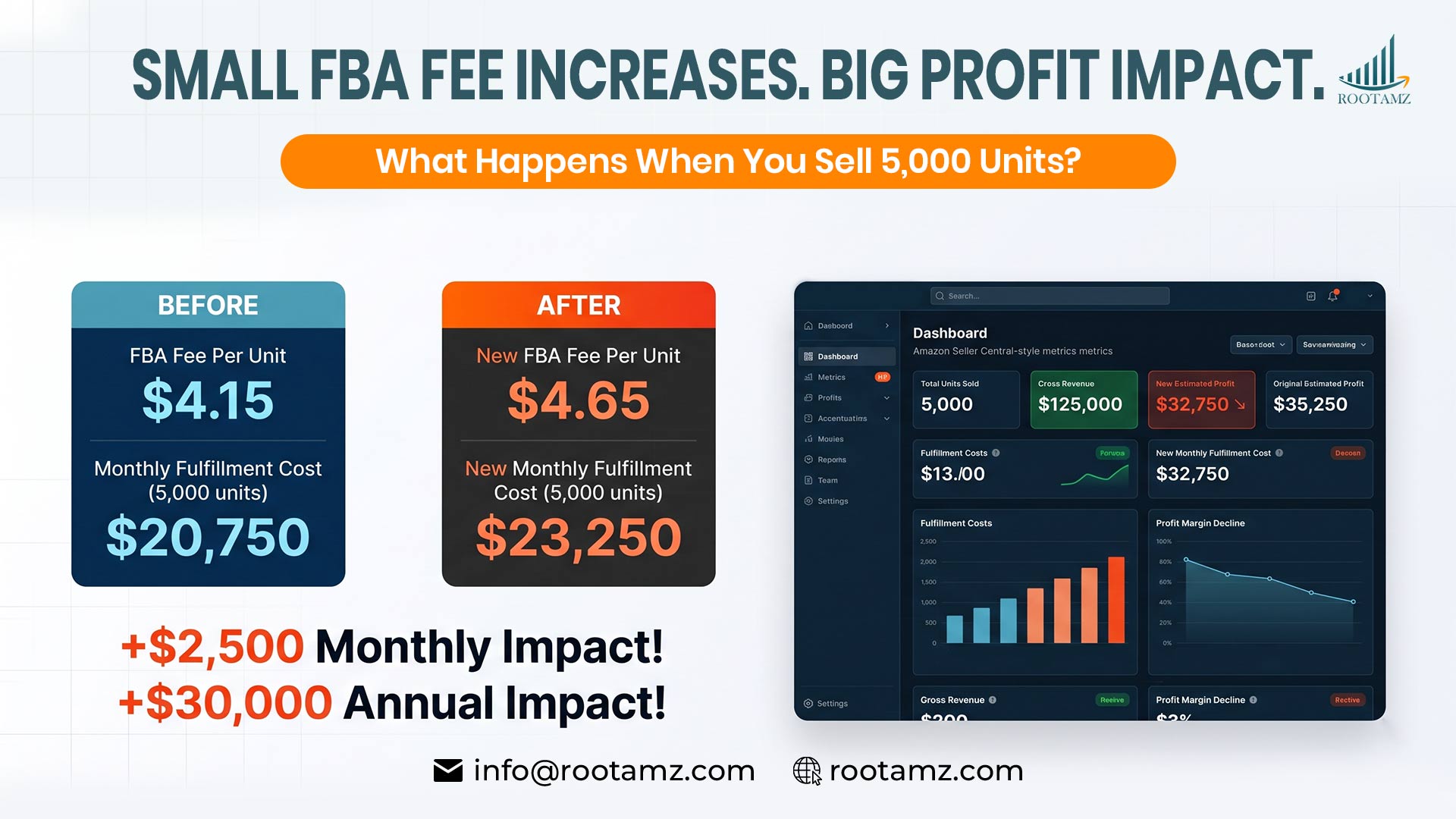
More orders don't automatically mean more profit.
That's why peak fees should be included in your product-level profitability calculations.
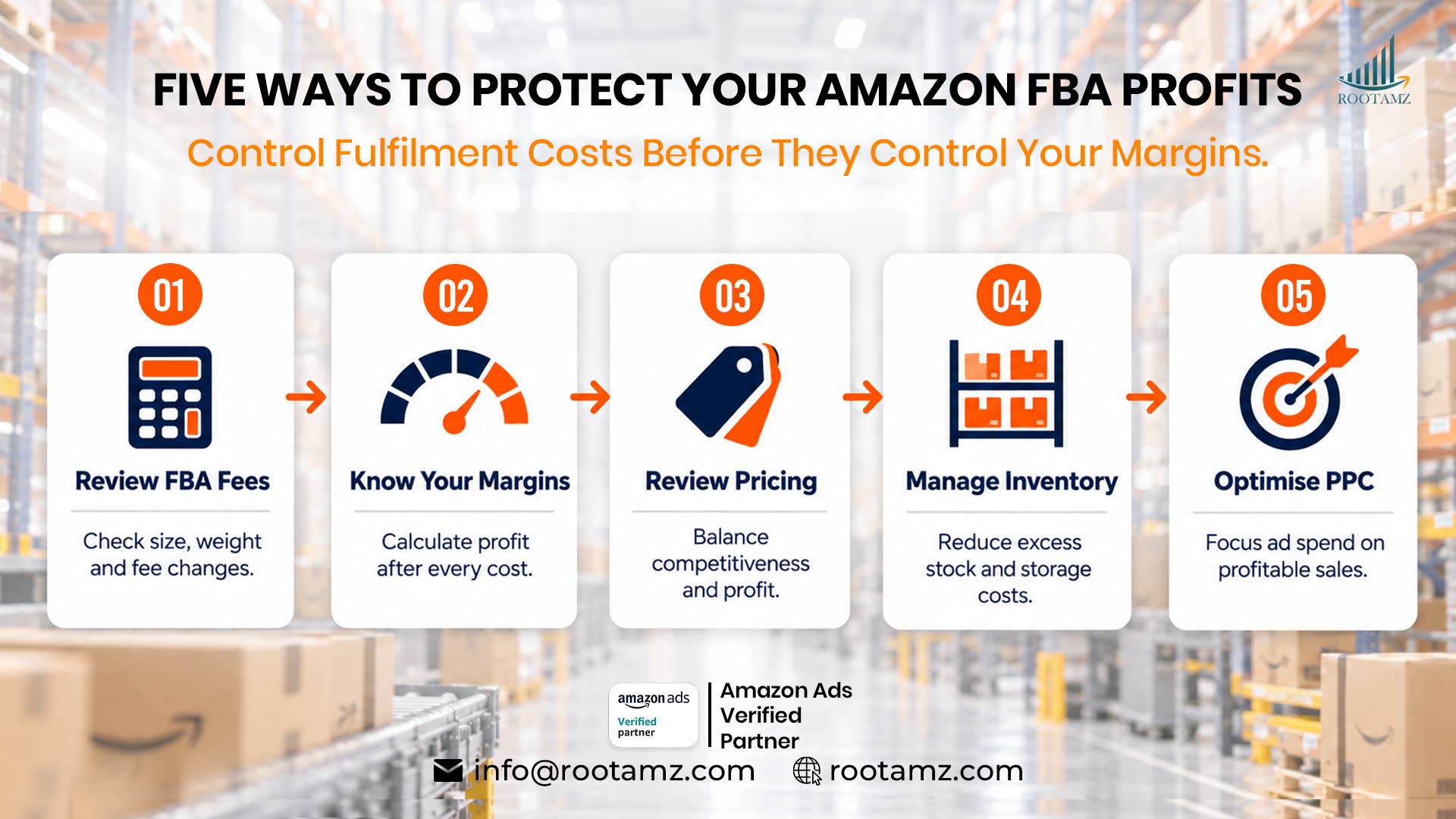
4. Five Ways to Protect Your FBA Profit Margins
You can't simply ignore Amazon's seasonal fees.
But you can prepare your business to manage them.
1. Review your fulfilment costs
Use Amazon's Revenue Calculator and fee preview reports to compare non-peak and peak costs.
2. Identify low-margin products
Find products where higher fulfilment fees could make sales unprofitable.
3. Review your pricing strategy
Check whether your current prices and promotions still support healthy margins.
4. Improve inventory planning
Avoid sending unnecessary stock that creates additional storage costs.
5. Connect advertising with profitability
Before increasing PPC spending, make sure the products you're promoting can absorb the extra costs.
For additional guidance, read our Amazon FBA Storage Fees Guide and End-of-Year Inventory Planning Guide.
🚀 How RootAMZ Helps Sellers Manage Rising Amazon Costs
At RootAMZ, we understand that marketplace growth isn't just about increasing sales.
It's also about protecting the profit behind those sales.
Our marketplace management support includes:
FBA Cost Reviews: Identifying fulfilment and storage cost pressures.
Inventory Planning: Improving stock allocation and reducing unnecessary holding costs.
Pricing Strategy: Reviewing product economics and promotional profitability.
Amazon PPC Management: Connecting advertising decisions with product margins.
Marketplace Reporting: Helping brands understand performance across US and UK operations.
The goal is simple: grow your sales without losing control of your costs.
Ready to Protect Your Holiday Profit Margins?
Don't let unexpected fulfilment expenses weaken your year-end performance.
Book Your Amazon Marketplace Strategy Call and explore how RootAMZ can help.
FAQs
1. When do Amazon FBA peak fees apply in 2026?
From 15 October 2026 to 14 January 2027, subject to each marketplace's eligibility rules.
2. Are US and UK peak fees the same?
No. Their rates, eligible products and timing rules differ.
3. Does the US fuel surcharge still apply?
Yes. Amazon's 3.5% fuel and logistics-related surcharge applies to relevant US fulfilment fees.
4. Do UK low-price FBA products pay this peak fee?
No. The UK festive peak fee excludes qualifying low-price FBA items.
5. How can sellers protect profit?
Review fulfilment rates, product margins, advertising costs, pricing and inventory before increasing sales activity.