If you're running Seller Fulfilled Prime & haven't checked your delivery metrics since July, there's a real chance your numbers no longer meet the threshold & you might not know it yet.Amazon raised the SFP speed bar on July 6, 2026. It's the most significant upward revision to Seller Fulfilled Prime speed benchmarks since the program reopened to new enrollees in October 2023. The rules that kept you comfortably compliant six months ago may not be enough today. & the grace period Amazon built in to ease the transition? It runs through October 17, 2026. After that, there's no buffer. Toucan Ecommerce
Here's everything you need to know.
What Actually Changed on July 6
The mechanics of how Amazon measures SFP performance haven't changed it's the bar itself that moved.
The current requirements are measured by the percentage of Prime customer page views that display qualifying delivery dates not the percentage of orders ultimately delivered within those windows. Sellers must manage both displayed promises & actual delivery performance. Forest Shipping
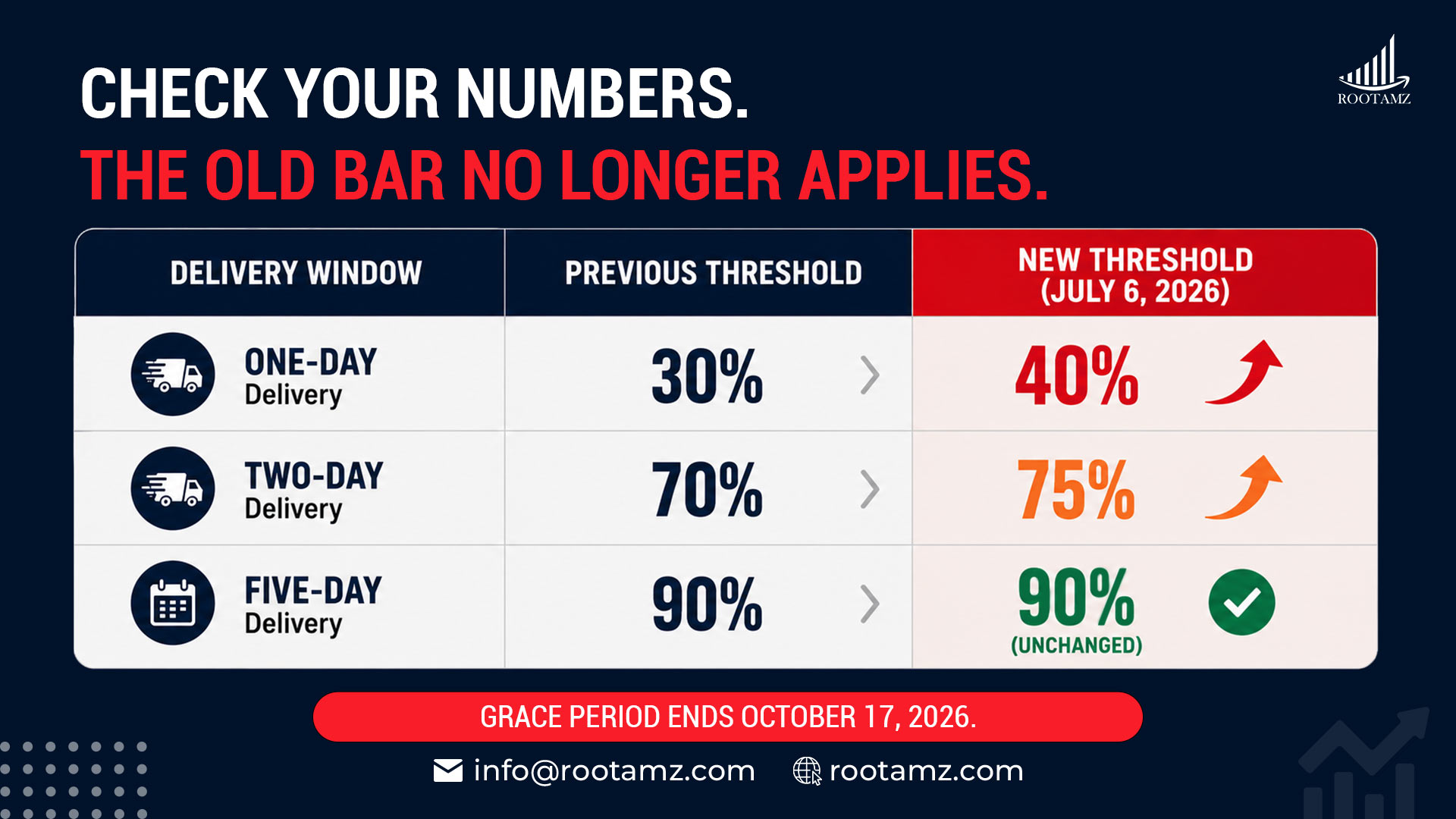
For standard-size items, here's what shifted:
One-day delivery: 40% of Prime page views must show a one-day delivery date, up from 30%. Nova Analytics
Two-day delivery: 75% of Prime page views, up from 70%.
Five-day delivery: 90% unchanged.
For oversized items, the extra-large two-day threshold is the most aggressive change in relative terms a 67% increase over the previous level. For sellers handling bulky items from a single regional warehouse, that gap is difficult to close without infrastructure changes. Nova Analytics
The number that catches most sellers off guard is the one-day figure. 40% nationwide one-day coverage sounds achievable until you do the math on what it actually requires. For most single-warehouse operations, it requires more warehouses. Nova Analytics
The Grace Period & What Happens When It Ends
Amazon has excluded weekend orders from speed metric calculations until October 17, 2026. This is designed to give sellers time to adapt to both the new speed requirements & the new delivery promise tool. Weekend orders still need to be fulfilled as required, but they won't count against your speed scores during the transition window. Toucan Ecommerce
That's a meaningful cushion but October 17 is closer than it feels & sellers who are using the grace period as a reason to delay reviewing their numbers are taking a risk they probably don't intend to.
After the grace period, Amazon will suppress the Prime badge & Buy Box eligibility for non-compliant offers. Losing the Prime badge on a self-fulfilled listing doesn't just hurt conversion. It effectively removes those listings from the consideration set of a large portion of Amazon's most valuable customers Prime members who filter by Prime delivery as a default.
The New Delivery Promise Tool Coming in September
Amazon plans to launch a new Delivery Promise tool in September 2026. It will allow sellers to set shipping speeds by ZIP code, define weekend delivery capabilities & configure daily order cut-off times. These settings will directly affect the estimated delivery dates shown to customers on Amazon product pages.
This is a significant operational shift. Previously, Amazon's delivery promise was largely driven by your ship-from location. The new tool gives sellers far more granular control but it also means far more granular accountability. A ZIP code where you promise one-day delivery & don't deliver it will show up in your metrics in a way the old system didn't isolate.
For sellers with good carrier relationships across multiple regions, this is an opportunity to display faster delivery promises where they can actually back them up. For sellers running a single warehouse, it's a tool that will make their geographic coverage limitations visible in ways they weren't before.
What To Do Before October 17
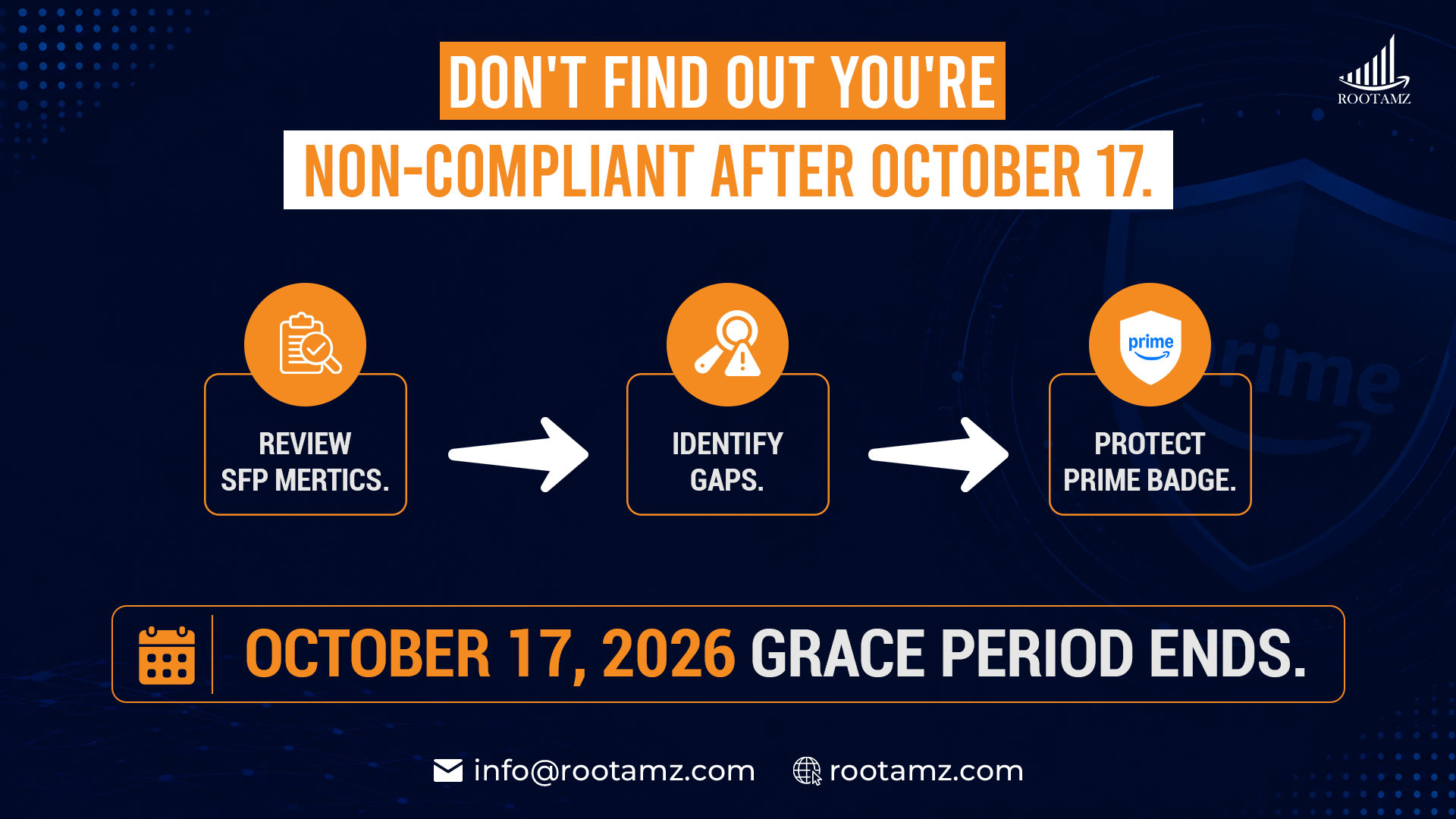
Go into your Seller Central account now & pull your SFP speed metrics. Look at the one-day & two-day coverage percentages by size tier. If you're sitting at or near the previous thresholds 30% one-day, 70% two-day you're no longer compliant & the grace period is the only thing currently protecting your badge.
Three practical areas to review:
Carrier mix. Is your current carrier getting packages delivered within the promised window consistently? Pull your actual delivery performance, not just the promised dates. A carrier promising one-day that's delivering in two consistently is quietly eroding your metrics.
Warehouse cut-off times. Same-day dispatch cut-off times directly affect the delivery date displayed to customers. If your cut-off is 12pm & a competitor's is 3pm, their listings are displaying a faster promise than yours for orders placed in the afternoon & Amazon's algorithm accounts for that.
Geographic coverage. For the one-day threshold specifically, coverage is a zip-code-level problem. Where are your Prime customers actually located versus where your warehouse ships fast to? The new Delivery Promise tool will make this visible. Get ahead of it now.
How RootAMZ Helps You Stay Compliant & Competitive
Staying on top of SFP metrics while managing the rest of your Amazon operation is one of those things that's easy to deprioritise until it becomes urgent. The Prime badge remains one of the most powerful conversion drivers on Amazon. Customers associate Prime with fast, reliable delivery & often prioritise Prime offers when making purchasing decisions. Losing it even temporarily has a direct impact on revenue that compounds fast. DAM Law Firm
RootAMZ's Amazon Seller Central Management includes ongoing account health monitoring across all SFP performance metrics, with proactive alerts when numbers trend toward the threshold before they breach it.
Services RootAMZ Provides:
Amazon Seller Central Management continuous monitoring of SFP speed metrics, on-time delivery rate, valid tracking rate & cancellation rate.
Amazon Listing Optimisation listings built to convert at the highest rate once your Prime badge is secured & protected.
Amazon PPC Management advertising strategy that accounts for Prime badge eligibility, since Prime status directly affects ad performance & Buy Box positioning.
FBA vs SFP Strategy Review for sellers questioning whether SFP is still the right fulfilment model given the new requirements.
Account Health & Compliance Support early warning monitoring across every metric that can trigger suppression or account-level action.
Amazon Brand Store Design storefronts that convert the Prime-badge-driven traffic you're working to protect.
Whether you're comfortably meeting the new thresholds or not sure where you stand, RootAMZ brings the operational oversight to keep your SFP status protected & your listings performing.
FAQ's
New SFP Speed Requirements:
40% one-day, 75% two-day, and 90% five-day delivery for standard-size items.
If You Don’t Meet Them:
After October 17, Amazon may suppress the Prime badge and remove Buy Box eligibility.
Grace Period:
Weekend orders are excluded from metrics until October 17, 2026.
Delivery Promise Tool:
Launching in September, it lets sellers set delivery promises, weekend delivery, and cut-off times by ZIP code.
Can RootAMZ Help?
Yes. RootAMZ can audit your SFP metrics, identify gaps, and help you prepare for compliance.