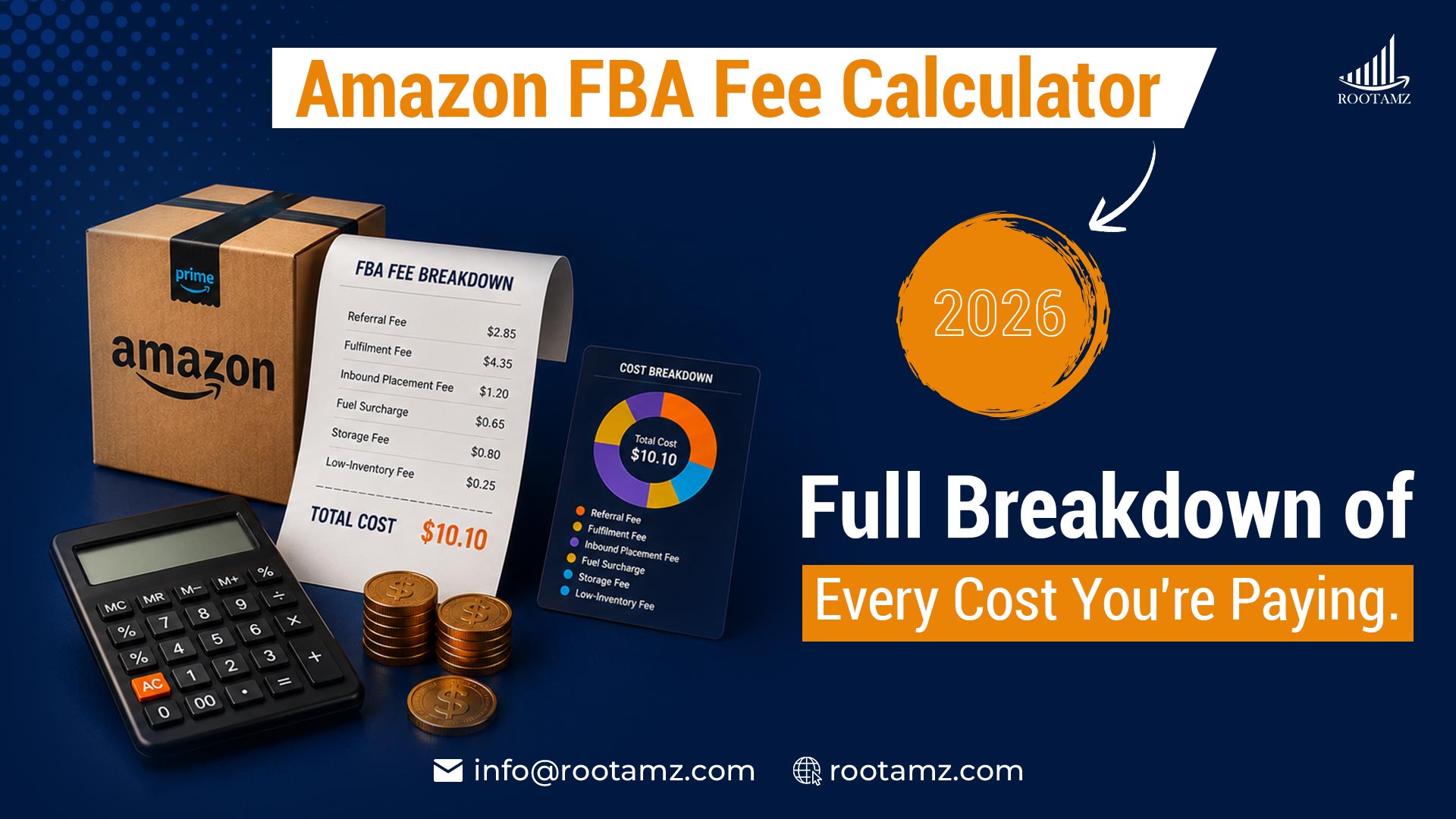
A seller messaged us in April after his quarterly statement came through. His product hadn't changed. His price hadn't changed. His sales were actually up. But his take-home was noticeably down. He went through the statement line by line & realised he hadn't accounted for two fee updates that had quietly taken effect since his last proper margin review.
He's not alone. In 2026, Amazon's fee structure changed twice in four months once in January & again in April. If you haven't sat down with a calculator since then, there's a real chance your margin is smaller than you think.
Here's every cost, what changed & what it means for your numbers.
Fulfilment Fees: The Base Cost That Changed Twice
Fulfilment fees are what Amazon charges to pick, pack & ship each unit. They're calculated by size tier & weight small standard, large standard, large bulky & extra-large & they went up on January 15.
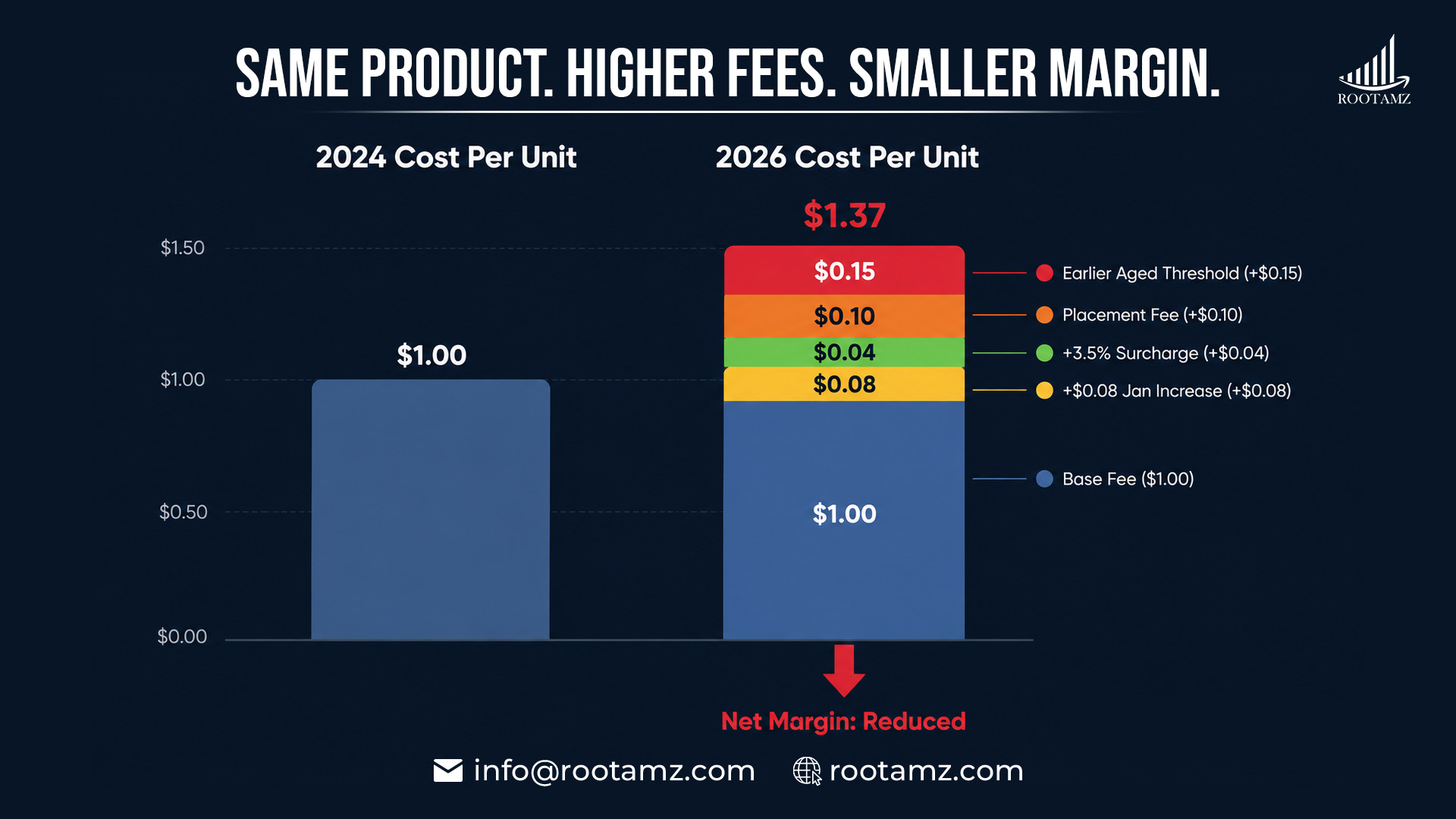
The average increase was $0.08 per unit. Amazon described it as less than 0.5% of an average item's selling price, which is technically accurate but a bit misleading. On a product running a 15% net margin, that increase represents a 2 to 5% reduction in actual profit. At 5,000 units a month, $0.08 adds up to $4,800 a year from a single line item alone.
Then April 17 arrived with a 3.5% fuel & logistics surcharge on top of every FBA fulfilment fee in the US & Canada. Multi-Channel Fulfilment & Buy with Prime followed on May 2. On a typical standard-size item with a base fee around $3.68, that surcharge adds roughly $0.13 per unit. Multiply that across volume & it compounds fast.
One more structural change worth knowing: 2026 introduced price-based tiers for the first time. Products priced over $10 now face higher fulfilment fees than products under $10 within the same size tier. If you have products sitting just above a threshold $10.01, $15.01 it's worth running the numbers on whether pricing slightly below that line saves you meaningful money at scale.
The Fees That Catch Sellers Off Guard
Inbound Placement Fee
Introduced in 2024 & expanded since, this fee applies when Amazon redistributes your inventory across its fulfilment network. For most sellers it adds $0.27 to $1.58 per unit. For oversized items, fees roughly doubled in 2026. The fix: ship to five or more fulfilment centre destinations & the fee drops to zero. Ship to fewer & you're paying Amazon to do the distribution work you could have done yourself.
Low-Inventory-Level Fee
If your stock for a product drops below 28 days of supply relative to sales velocity, Amazon charges $0.89 to $1.10 per unit shipped until you restock. The practical answer: keep 35 to 45 days of inventory on hand as your minimum. That gives you a buffer for supplier delays without tipping into the aged inventory zone on the other side.
Aged Inventory Surcharge
This one changed significantly. The surcharge used to kick in at 271 days. It now starts at 181 a full 90 days earlier than before. Inventory you assumed had plenty of runway is already in the watch zone. Anything approaching 150 days needs a clearance, removal, or liquidation decision now, not when the fee hits.
Returns Processing Fee
For high-return categories apparel, shoes, jewellery, electronics accessories Amazon charges $2.16 to $11.35 per returned unit depending on size. If your category has a naturally high return rate, this needs to be in your per-unit cost model before launch, not discovered on your statement afterwards.
What a Real Per-Unit Stack Looks Like
Here's roughly what a standard-size product priced at $25 is facing in 2026. Referral fee at 15% is $3.75. Fulfilment fee around $3.80 after January's increase & the April surcharge. Then storage, inbound placement & any returns on top. You're clearing around 35% in combined fees before a single pound of advertising spend is counted.
On a well-run product with strong velocity, that's workable. On a product already squeezed for margin, it isn't & that's the honest conversation most sellers need to have with their SKU catalogue right now.
How RootAMZ Helps You Protect Your Margin
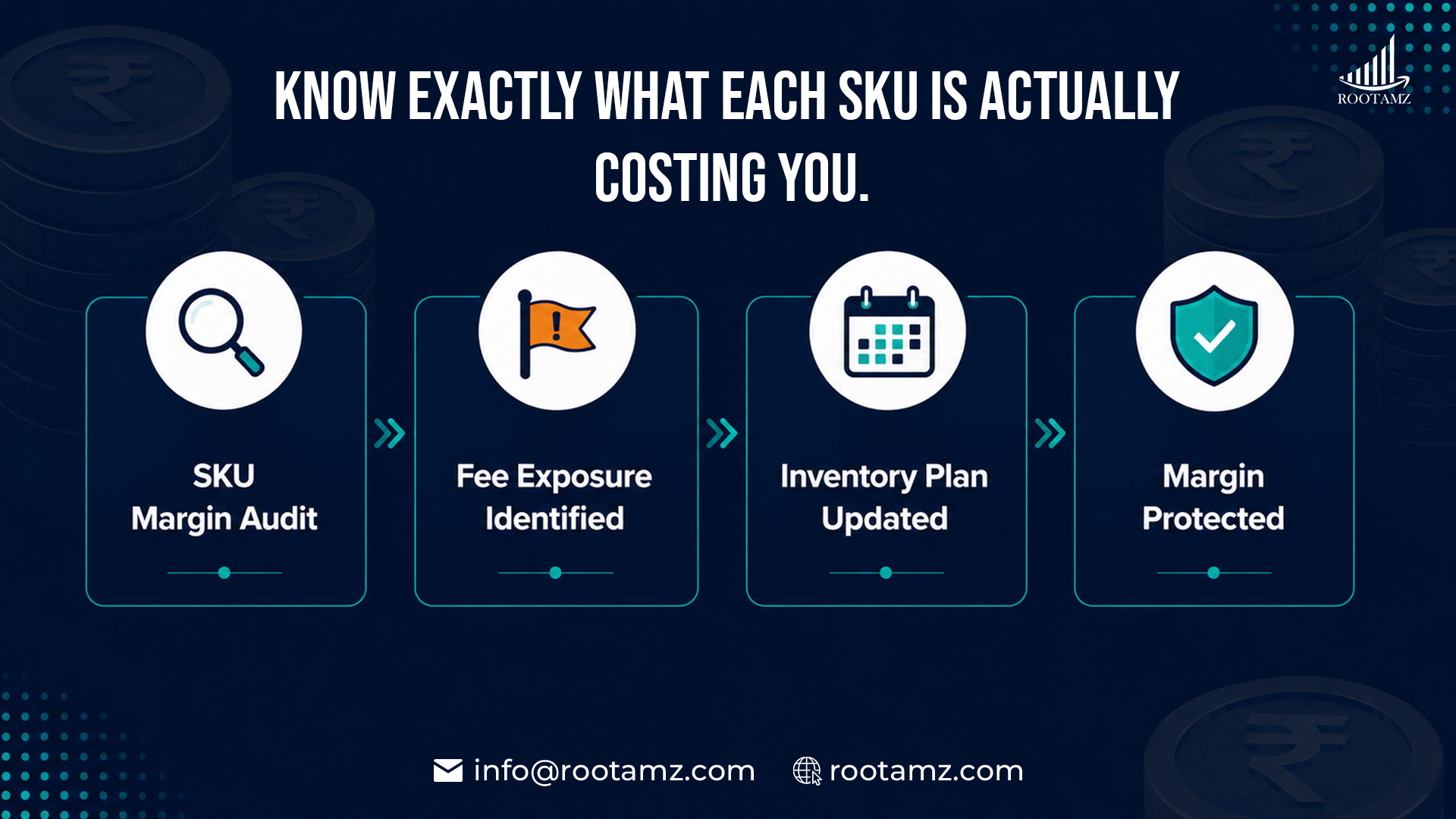
Understanding your fees is one thing. Building an operation that structurally avoids the most punishing ones is another. RootAMZ works with FBA sellers to run proper per-unit margin analysis, identify SKUs quietly bleeding money, & put inventory processes in place before fees compound into a real problem.
Services RootAMZ Provides:
Amazon Seller Central Management — end-to-end account oversight including fee monitoring & profitability tracking.
Amazon FBA Strategy & Inventory Planning — stock level management built around the 2026 fee thresholds.
Amazon Listing Optimisation — conversion-led copy that improves sell-through velocity & reduces aged inventory risk.
Amazon PPC Management — ad spend structured around real margins, not vanity metrics.
Amazon Reimbursement Claims — recovering money owed for lost, damaged, or incorrectly charged inventory.
Amazon A+ & Premium A+ Content — content that reduces return rates by setting accurate buyer expectations upfront.
Whether you need a full margin audit or help navigating a specific fee issue, RootAMZ has the operational experience to work through it properly.
FAQ's
How much did Amazon FBA fees increase in 2026?
Base fulfilment fees went up by an average of $0.08 per unit on January 15. A 3.5% fuel & logistics surcharge followed on April 17. Combined with expanded inbound placement fees & an earlier aged inventory threshold, many sellers are seeing $0.40 to $0.80 or more in new per-unit costs when everything is stacked together.
What is the Amazon fuel surcharge in 2026?
A 3.5% surcharge applied to all FBA fulfilment fees in the US & Canada from April 17, 2026. For Multi-Channel Fulfilment & Buy with Prime orders, it took effect May 2. It's calculated on your fulfilment fee, not your sale price.
When does the aged inventory surcharge kick in now?
In 2026 it starts at 181 days, down from 271 days previously. That means inventory approaching 150 days needs to be reviewed for clearance or removal well before it crosses into the penalty zone.
What is the low-inventory-level fee & how do I avoid it?
A charge of $0.89 to $1.10 per unit shipped when stock drops below 28 days of supply. Keep 35 to 45 days of inventory on hand & set restock alerts before you get close to that threshold.
Can RootAMZ help me audit my FBA costs?
Yes. RootAMZ runs per-unit margin analysis across your catalogue, identifies which SKUs are being hit hardest by the 2026 changes, & helps build processes to reduce exposure going forward.