A seller we spoke to recently had spent three months researching private label before deciding it was "probably too late." He'd read a handful of forum threads, watched a few YouTube videos & convinced himself the market was saturated.
He wasn't entirely wrong to be cautious. But he was asking the wrong question. It was never about whether private label is still possible. It's about whether you're doing it the right way.
So let's get into it properly no hype, no doom, just what's actually happening on the ground in 2026.
You're Building Something You Actually Own That Still Matters
When you sell wholesale on Amazon, you're fighting over a Buy Box on someone else's listing. When you do retail arbitrage, you're always one price drop away from wiping out your margin. Private label is different. You create the brand, you own the listing & nobody else gets to sell your exact product on top of you.
That ownership is still the single biggest reason private label makes sense as a long-term play. A well-run Amazon private label brand can be sold to an aggregator, expanded to Shopify, or grown into a full DTC business. You're not just making sales you're building something with a life beyond the next restock order.
That hasn't changed. What has changed is how much work it takes to get there & how many people are trying.
The Part Nobody Warns You About: The 2026 Fee Reality
Here's where a lot of new sellers get blindsided. They do the product research, run the numbers, get excited about a 30% margin & then slowly discover the full picture once they're actually selling.
Amazon introduced two new fees in 2024 & 2025 that quietly eat into margins most sellers haven't accounted for. The Inbound Placement Fee applies when you ship all your inventory to a single fulfilment centre rather than distributing it across Amazon's network. The Low-Inventory-Level Fee kicks in when your stock levels dip too low relative to what you've been selling.
Add those to referral fees, FBA fulfilment fees & storage costs & that 30% margin on paper turns into something closer to 12% in your bank account. It's not a dealbreaker but you have to know about it before you order your first production run, not after.
The rule of thumb worth following: if your margin doesn't clear 20% after the full 2026 fee stack is applied at the research stage, that product idea isn't ready yet.
Where People Are Actually Winning Right Now
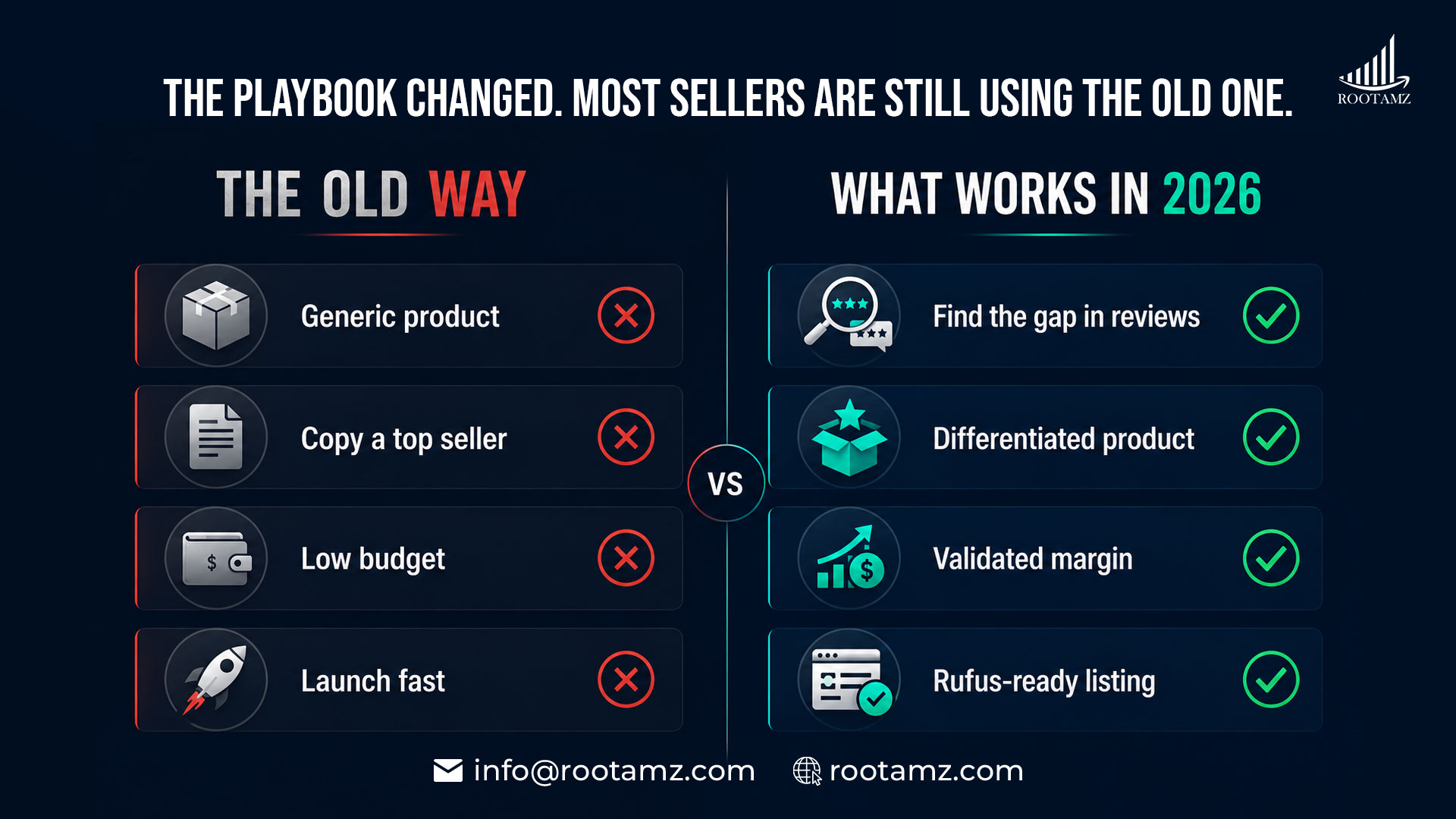
The sellers struggling in 2026 are mostly doing the same thing: picking a high-volume category, sourcing a generic product from Alibaba, adding a logo & hoping PPC carries them. That approach isn't just hard anymore it's nearly guaranteed to fail. The people already sitting at the top of those categories have thousands of reviews, better supplier pricing & bigger ad budgets than a new launch can compete with.
The sellers winning are doing something simpler but smarter. They're finding the gap. They're going into a category, reading the one & two-star reviews on the top listings & finding the thing buyers keep complaining about the lid that leaks, the strap that snaps, the sizing that runs small. Then they're building a product that actually fixes it. That becomes the entire listing story, the A+ content, the PPC angle, the review strategy.
Beauty & personal care, home & kitchen sub-niches with a sustainability angle, pet supplies & sports & outdoors are still producing genuinely profitable brands. But the category is almost secondary to whether you've found a real problem to solve inside it.
On budget: a properly funded launch today realistically needs between $8,000 & $12,000. That covers the first production run, professional photography, listing content, Brand Registry & enough PPC budget to build velocity in the first 60 days which is when rankings are hardest to earn & most important to get right.
One More Thing Most Sellers Miss: Rufus Is Reading Your Listing
Amazon's AI shopping assistant, Rufus, now answers buyer questions directly inside the app. It reads your listing title, bullets, A+ Content, reviews, Q&A & decides whether your product is worth recommending. Titles stuffed with keywords & no real product information give it nothing useful to work with.
This is actually good news for private label sellers who invest properly in listing content. Clear, benefit-led copy that explains what your product does & who it's for gets surfaced. Generic, keyword-padded listings get ignored. That's a gap you can exploit right now while most sellers haven't caught on yet.
How RootAMZ Helps You Get the Foundation Right
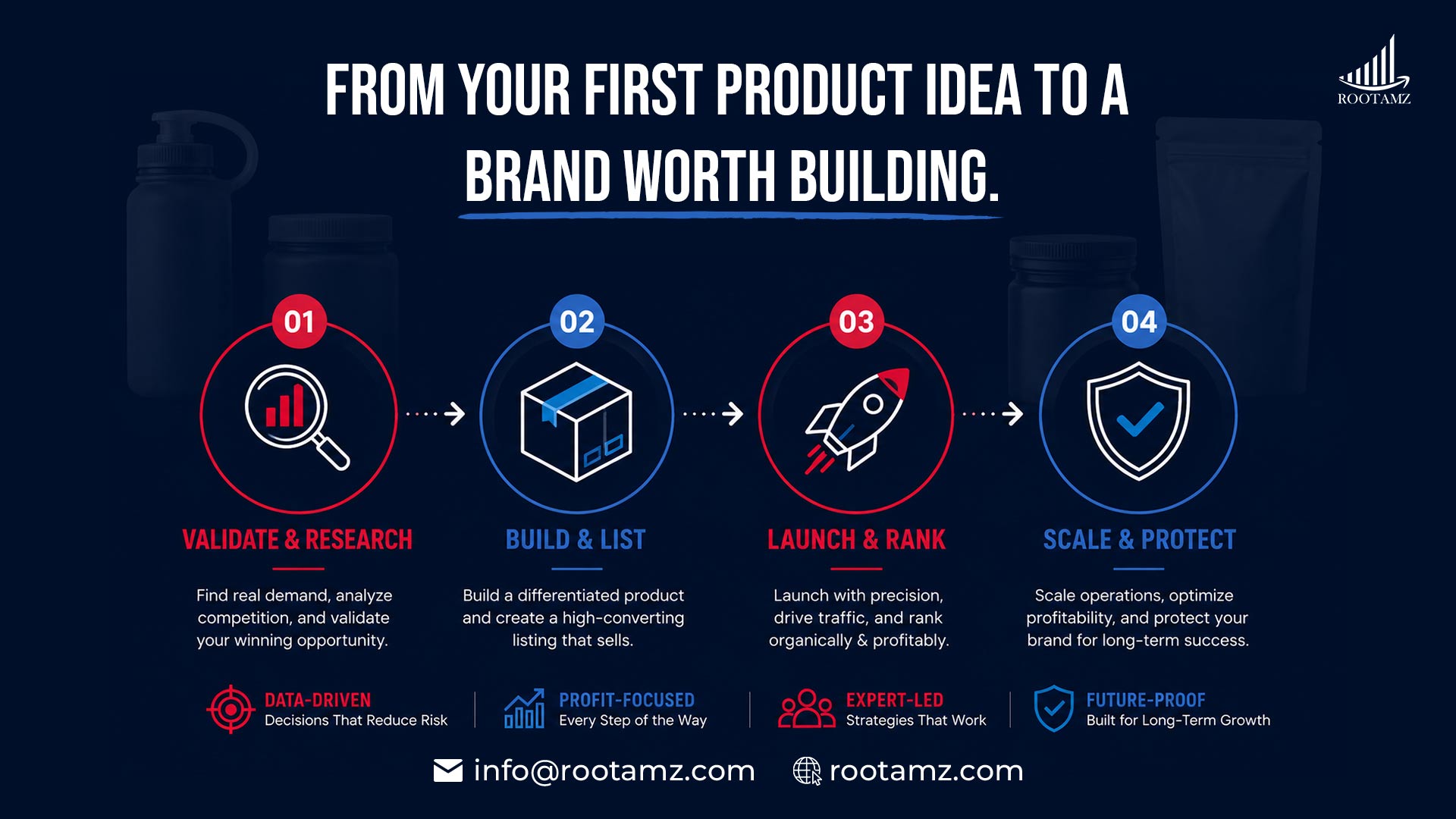
Most of the expensive mistakes in a private label launch happen early underfunded launches, unvalidated margins, listings that don't convert. RootAMZ works with sellers from the product research stage through to full catalogue scale, making sure the work that's hardest to undo is done properly from the start.
SERVICES ROOTAMZ PROVIDES:
Amazon Listing Optimisation benefit-led, Rufus-ready copy built around real buyer language.
Amazon PPC Management launch campaigns & ongoing bid management built around your actual margins.
Amazon Brand Registry Support guiding new brands through enrolment & unlocking A+ Content.
Amazon A+ & Premium A+ Content content that answers real buyer questions & builds brand trust.
Amazon Brand Store Design a storefront that carries your brand story beyond the listing page.
Product Infographics & Photography Briefs visual assets that convert at every stage of the listing.
Whether you're still validating your first product or already live & trying to scale, RootAMZ brings the experience to build private label brands that hold their ground in 2026 & beyond.
FAQ's
Is Amazon private label still profitable in 2026?
Yes but the bar is higher than it was. Sellers who research properly, find a real differentiation angle & launch with adequate budget are still building strong, scalable brands. Sellers going in underfunded with a generic product are struggling.
How much money do I actually need to launch?
A well-funded launch realistically needs $8,000 to $12,000 covering production, photography, listing content & PPC. You can start leaner, but underfunding your launch usually just delays profitability & increases the risk of burning out before you gain traction.
Which categories are still working well?
Beauty & personal care, home & kitchen sub-niches (especially eco-positioned products), pet supplies & sports & outdoors remain strong. The category matters less than whether you've found a specific gap within it.
How does Amazon Rufus affect my listing?
Rufus reads your full listing to answer shoppers' questions. Clear, benefit-led copy gets recommended. Keyword-padded, thin listings get passed over. It's one of the biggest reasons proper listing content matters more than ever in 2026.
Can RootAMZ help me launch a private label brand from scratch?
Yes. RootAMZ supports sellers from initial product validation, Brand Registry & listing creation through to PPC campaigns & ongoing account management.