Getting an invitation to sell to Amazon as a vendor feels like a milestone. Your products can reach millions of shoppers, and Amazon takes on much of the retailing work.
Then the daily operations begin: purchase orders to confirm, invoices to submit, shortages to explain, chargebacks to dispute and listings that need constant attention. Many brands find that Amazon Vendor Central Management is a full-time operational job, not a one-time account setup.
In this guide, we explain how Vendor Central works, what effective management involves, which mistakes cost brands money, and how to decide whether to manage the account in-house or with expert support.
What Is Amazon Vendor Central?
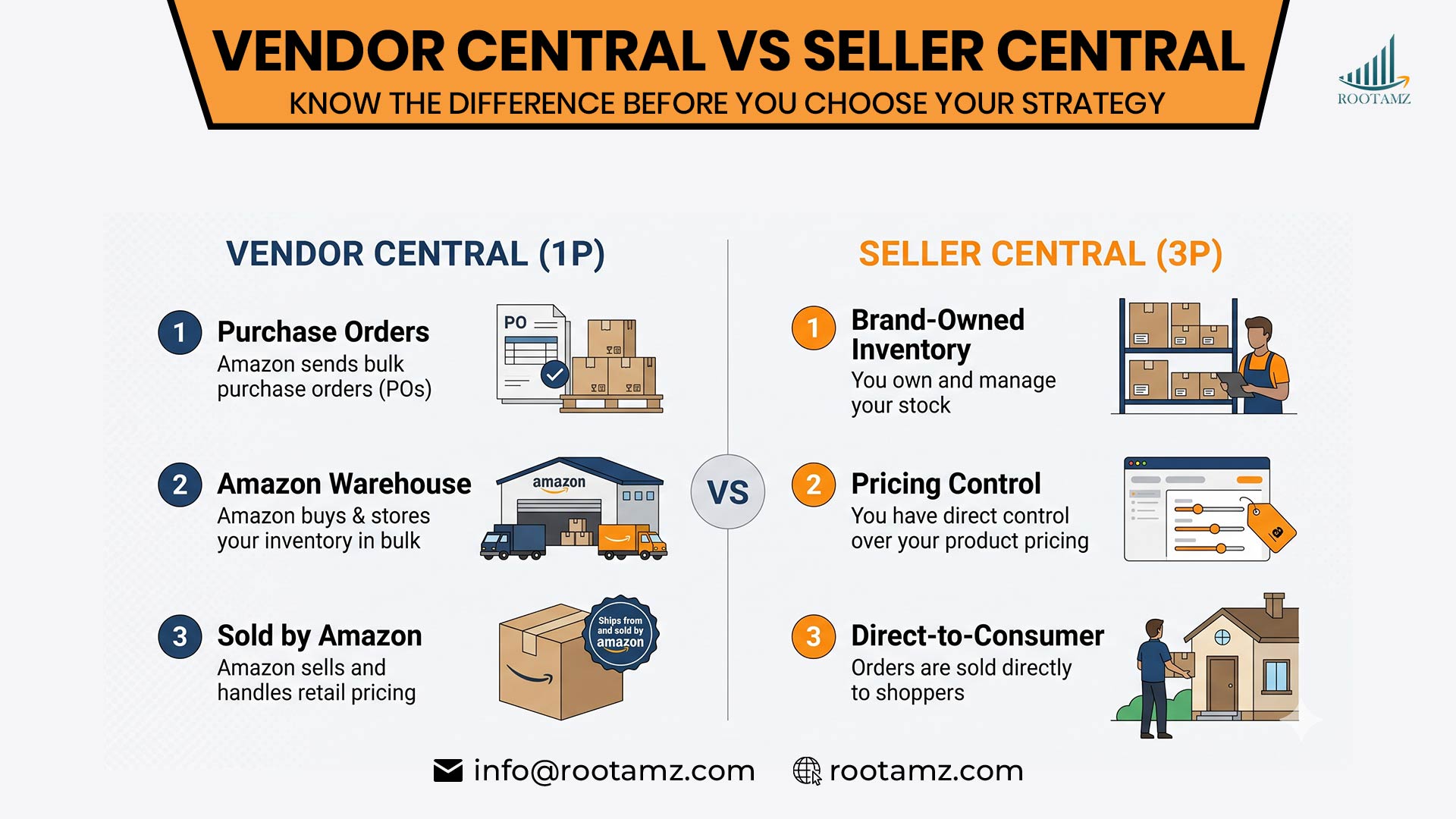
Amazon Vendor Central is the platform for manufacturers, distributors and brands that sell to Amazon on a wholesale basis. This is commonly called the 1P (first-party) model. Amazon buys your products, holds the inventory, sets the retail price in most cases and sells to the customer.
This differs from Seller Central, where the brand sells directly to the customer, controls pricing and manages fulfilment (3P).
| Vendor Central (1P) | Seller Central (3P) |
Who sells to the customer | Amazon | You |
Who owns the inventory after purchase | Amazon | You |
Pricing control | Mostly Amazon | You |
How orders arrive | Purchase orders | Customer orders |
Main operational focus | POs, invoices, chargebacks, content, vendor terms | Listings, fulfilment, pricing, account health |
Availability, invitation requirements and features can change, so confirm current eligibility and terms directly in your Amazon account.
1. What Does Amazon Vendor Central Management Involve?
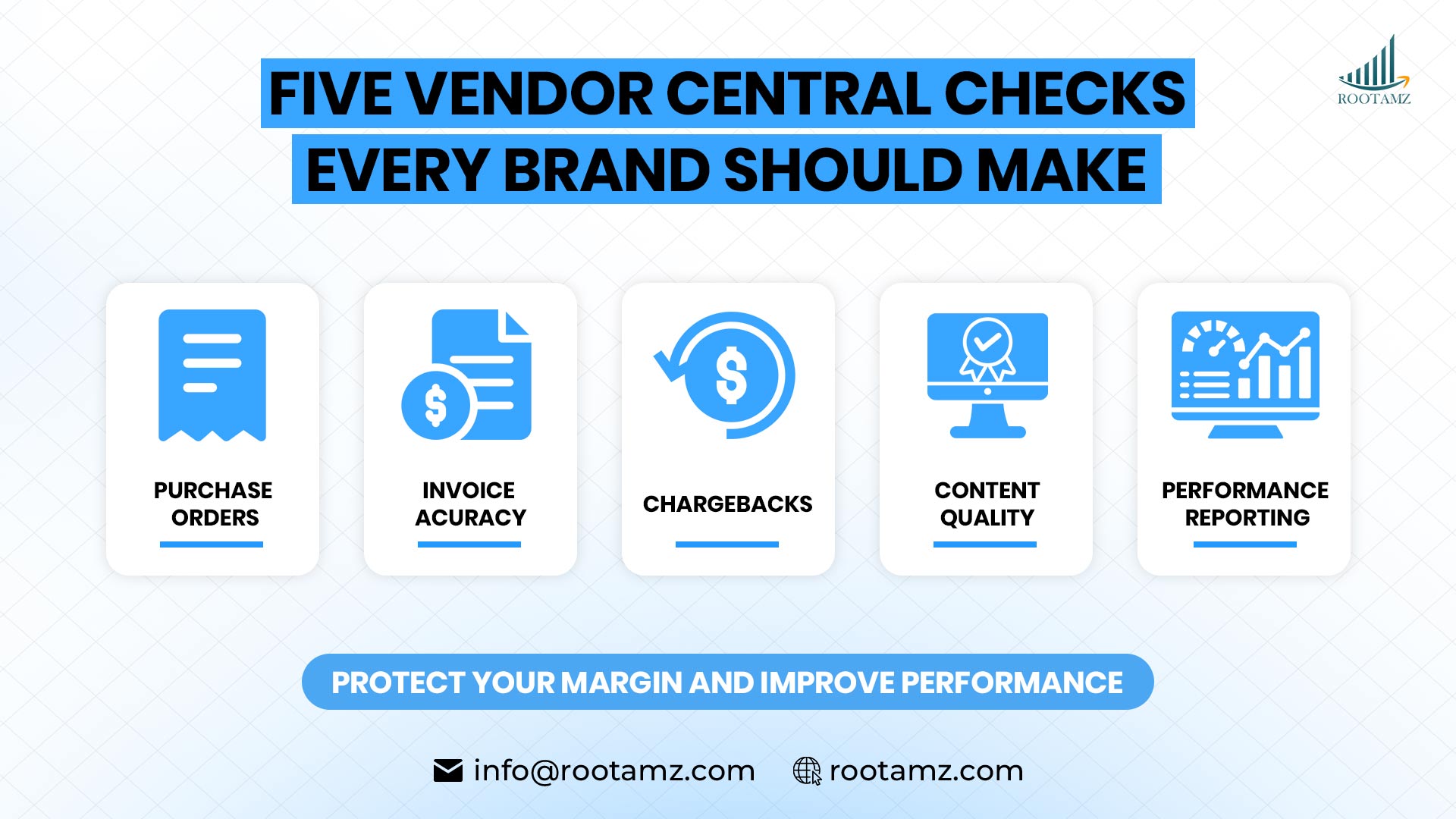
Effective Amazon Vendor Central Management covers several connected areas. If one area is neglected, the others often suffer.
Purchase order management. Amazon sends purchase orders based on its demand forecasts. Vendors must confirm them accurately, ship on time and keep delivery windows. Missed or poorly handled orders can reduce availability and affect the relationship with the vendor team.
Invoicing and payments. Invoices must match purchase orders, shipments and agreed terms. Mismatches can delay payment and lead to deductions. Reviewing payment statuses regularly prevents small issues from growing.
Chargebacks and shortages. Vendors can face deductions for issues such as late shipments, labelling errors or shortage claims. Not every deduction is valid, and many can be disputed with the correct documentation.
Catalogue and content. Titles, images, bullet points, A+ Content, brand content and product attributes all influence how customers find and trust your products. Accurate data also supports compliance with Amazon's catalogue requirements.
Pricing and promotions. Vendors need to understand cost price, retail price, promotional programmes and any co-operative advertising or allowance terms in their agreement.
Advertising. Vendors can use Amazon Ads to improve visibility. Campaigns work best when they support products that are in stock, well-presented and competitively priced.
Analytics and reporting. Sales, inventory, traffic and forecast reports help brands decide what to promote, restock or fix.
2. Why Vendor Central Is Harder Than It Looks
Many brands assume that once Amazon is the retailer, the hard work is done. In practice, vendor accounts create their own challenges.
Less control over price. Amazon often controls the retail price, which can affect brand positioning and other sales channels.
Forecast dependency. Purchase orders follow Amazon's forecast, which may not match your production schedule.
Strict operational rules. Routing, labelling, packaging and delivery appointment requirements must be followed.
Complex financial reconciliation. Matching purchase orders, invoices, receipts and payments requires attention to detail.
Content-driven visibility. Weak listings lose traffic and conversions even when Amazon holds the inventory.
None of these problems is impossible to solve, but each needs consistent monitoring.
3. Common Vendor Central Mistakes to Avoid
Treating Vendor Central like Seller Central. The tools, terms and strategy differ. Approaches that work for 3P selling may not suit a wholesale relationship.
Ignoring chargebacks. Deductions that are never reviewed or disputed can quietly reduce margin.
Neglecting content. Amazon holding the stock does not guarantee that customers will find or choose your product. Poor images, thin copy and incomplete attributes limit performance.
Advertising products that are not ready. Sending traffic to a listing with stock problems, weak content or an uncompetitive price wastes budget.
Reacting instead of planning. Waiting until stock-outs or payment delays appear makes problems harder to fix. Regular reviews of forecasts, inventory and purchase order performance are more effective.
Not understanding the vendor agreement. Margins, allowances, payment terms and return policies directly affect profitability. Review them before planning growth.
4. A Practical Framework for Managing Vendor Central
A simple, repeatable process helps brands stay in control.
Step 1: Audit the account. Review catalogue quality, purchase order history, invoice status, open deductions and content gaps.
Step 2: Fix the foundations. Correct product data, resolve outstanding invoice or shortage issues and confirm that logistics requirements are being met.
Step 3: Prioritise products. Identify your best sellers, strategic products and those with growth potential. Not every product deserves the same effort.
Step 4: Improve content. Update titles, images, bullet points and A+ Content so listings communicate benefits clearly and accurately.
Step 5: Align advertising. Use Amazon Ads for products that are in stock, well-presented and priced competitively. Measure results against sales and profitability, not clicks alone.
Step 6: Monitor and report. Track purchase order fill rates, in-stock performance, deductions, sales and advertising metrics on a regular schedule.
Step 7: Review and improve. Use the data to decide which products to promote, fix or deprioritise.
5. Should You Manage Vendor Central In-House or Outsource It?
Both approaches can work. The right choice depends on your resources and goals.
In-house management may suit brands that:
Have a dedicated team experienced in Amazon vendor operations
Manage a small catalogue
Have simple logistics and low deduction volumes
Expert support may help brands that:
Have limited time or Amazon experience
Face frequent chargebacks, shortages or payment delays
Manage large or fast-changing catalogues
Want better content, advertising and reporting alongside operations
Plan to expand to new categories or marketplaces
Outsourcing does not remove the need for brand involvement. Your team still provides product knowledge, approves key decisions and sets commercial goals. The right partner brings structure, experience and consistent follow-through.
6. How RootAMZ Can Help
RootAMZ supports brands and manufacturers with marketplace operations, advertising and account management. Our Amazon Vendor Central Management support can include:
Account audits and gap assessments
Catalogue and listing optimisation
A+ Content and creative support
Purchase order, invoice and deduction review
Amazon advertising and PPC strategy
Performance reporting and growth planning
The aim is not to add complexity. It is to connect daily operations with product positioning, content quality, advertising and measurable business goals.
Final Thoughts
Selling to Amazon through Vendor Central can open significant opportunities, but it is rarely a hands-off channel. Success depends on accurate operations, strong content, sensible advertising and regular review of the data.
If you are unsure whether your account is performing as well as it could, begin with an audit. Understand where margin is being lost, which listings need attention and which products deserve more investment. Then build a clear plan around those findings.
Manage with purpose. Measure with discipline. Grow with evidence.
Make Your Amazon Advertising Strategy Work Smarter
Whether you are new to Vendor Central or looking to improve an existing account, our team can review your current setup and suggest practical next steps. Explore our Amazon Vendor Central Management services or contact RootAMZ to discuss your marketplace goals.
FAQ's
What is Amazon Vendor Central Management?
It is the ongoing handling of a vendor account, including purchase orders, invoices, chargebacks, catalogue content, pricing support, advertising and performance reporting.
What is the difference between Vendor Central and Seller Central?
In Vendor Central, you sell wholesale to Amazon, which then sells to customers. In Seller Central, you sell directly to customers and usually control pricing and fulfilment.
Can anyone join Amazon Vendor Central?
Access is generally by Amazon invitation. Requirements and availability can change, so check current details in your Amazon account or with your Amazon vendor manager.
What are chargebacks in Vendor Central?
Chargebacks are deductions Amazon may apply to a vendor's payments, for example for shortages, late deliveries or compliance issues. Some may be valid, and others can be disputed with evidence.
Can I run advertising in Vendor Central?
Eligible vendors can use Amazon Ads to promote products. Available ad types and features depend on your account and marketplace.