Imagine a customer browsing a website and seeing an advertisement that features product videos, multiple product images or interactive shopping prompts instead of a simple product image.
This is how eCommerce display advertising is evolving.
In 2026, Amazon Ads has expanded its Responsive eCommerce Creative (REC) capabilities with in-banner video, multi-image carousels, adaptable layouts and AI-powered shopping experiences. These features help eligible advertisers create more engaging product advertisements across supported Amazon placements and third-party websites.
For brands and manufacturers, the goal is to improve product discovery, communicate benefits and connect creative content with campaign objectives.
Let's explore how these features work and how businesses can use them effectively.
What Is Amazon Responsive eCommerce Creative?
Amazon Responsive eCommerce Creative is an advertising solution that automatically generates responsive display advertisements using product information and selected creative assets.
Advertisers can use product listings, custom images, lifestyle visuals and videos. Amazon then creates different advertising variations for compatible placements.
Depending on availability, advertisements can also display product pricing, ratings, promotional badges and Prime-related information.
Learn more through the official Amazon Responsive eCommerce Creative guide.
1. Why Is Responsive eCommerce Creative Changing in 2026?
Traditional display advertising often requires separate creative assets for different placements and devices.
Amazon's updated capabilities provide more flexibility through:
Richer visuals: Combine product images, lifestyle photography and video.
Multiple products: Showcase three to six products through supported carousel formats.
AI-powered optimisation: Generate or select creative variations, headlines and layouts.
Interactive experiences: Allow eligible shoppers to explore products through conversational prompts.
These capabilities can simplify creative production, but advertisers must still review and approve their advertisements.
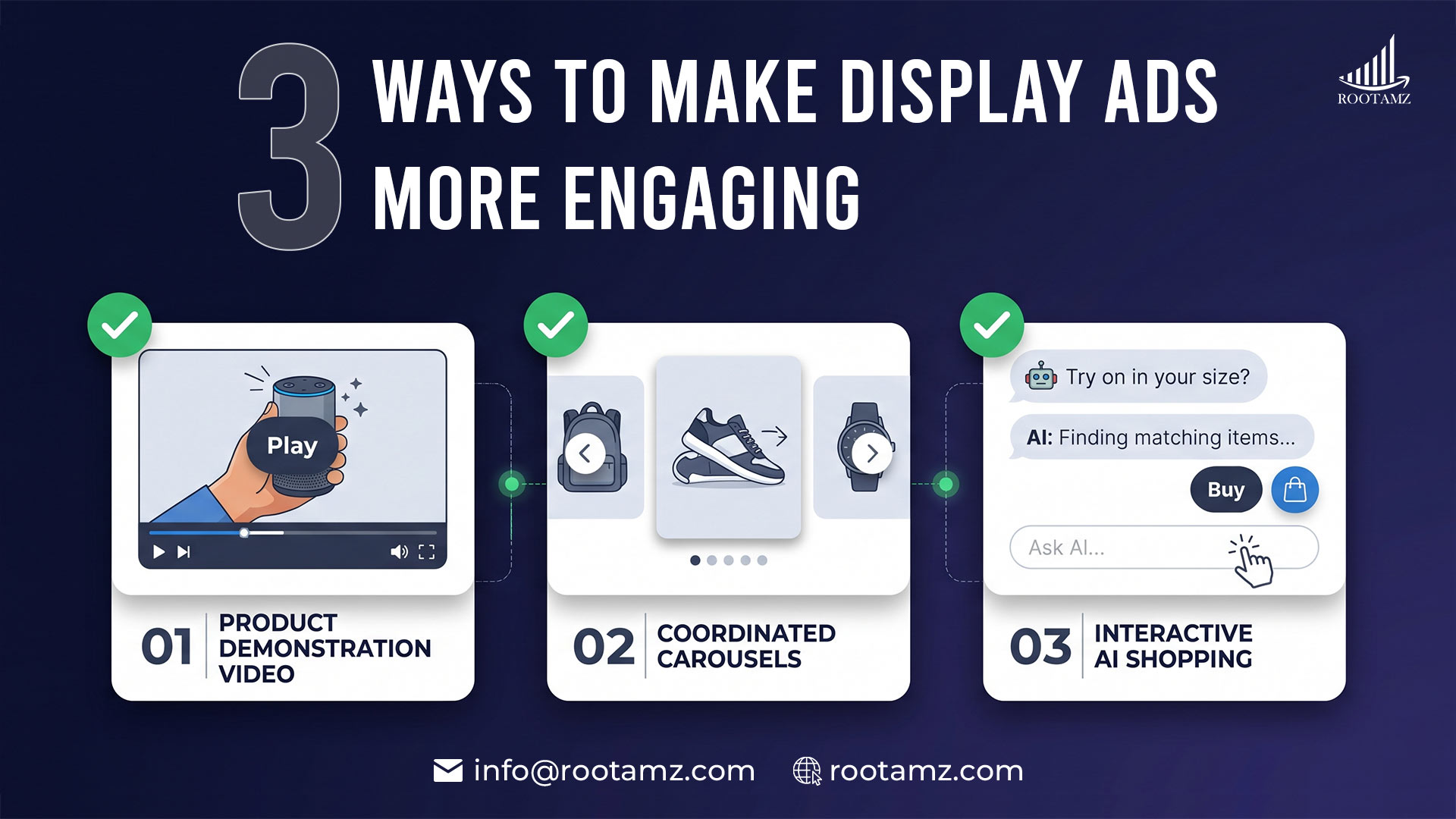
2. How Video Ads Improve Product Storytelling
Static images show what a product looks like, while videos can demonstrate how it works.
For example, a kitchenware brand can demonstrate product functionality, while a fitness brand can show how its accessories are used.
Amazon supports in-banner video in eligible markets and placements. Advertisers may upload existing videos or use supported generative tools.
Practical tip: Focus each video on one important product benefit. Keep the message clear, make the product recognisable and verify the final creative before launching.
3. Why Multi-Image Carousel Ads Matter
Some products require more than one image to communicate their value.
Amazon's supported carousel format allows advertisers to showcase three to six products from the same brand in a swipeable advertising unit.
For example, a skincare brand can display multiple products from a skincare routine, while an electronics brand can showcase complementary accessories.
Key benefits include:
Broader product discovery: Introduce shoppers to multiple products.
Better storytelling: Present complementary products together.
Creative flexibility: Showcase different product features and variations.
Catalogue promotion: Support campaigns featuring multiple eligible products.
However, a single-product advertisement may work better when the campaign focuses on one specific product.
4. How AI Shopping Prompts Are Changing Display Ads
Another important development is conversational shopping.
Eligible Responsive eCommerce Creative advertisements can feature AI-generated prompts that allow shoppers to explore product information through Alexa for Shopping.
For example, customers viewing a home appliance advertisement may ask questions about its features or suitability.
According to Amazon's documentation, these conversational prompts are currently available in the United States only.
Advertisers should check marketplace eligibility before planning campaigns around this feature.
5. How AI Helps Optimise Display Creative
AI can help advertisers select creative assets, generate visual variations, modify headlines and optimise product titles for different placements.
Amazon Ads reports that advertisements using AI optimisation achieved an average 14% increase in click-through rate and a 7.2% increase in return on ad spend in its cited internal data.
These are reported averages, not guaranteed results. Actual performance depends on campaign structure, product demand, competition, inventory and creative quality.
AI should support advertising strategy, not replace it.
6. How to Prepare a Responsive eCommerce Creative Campaign
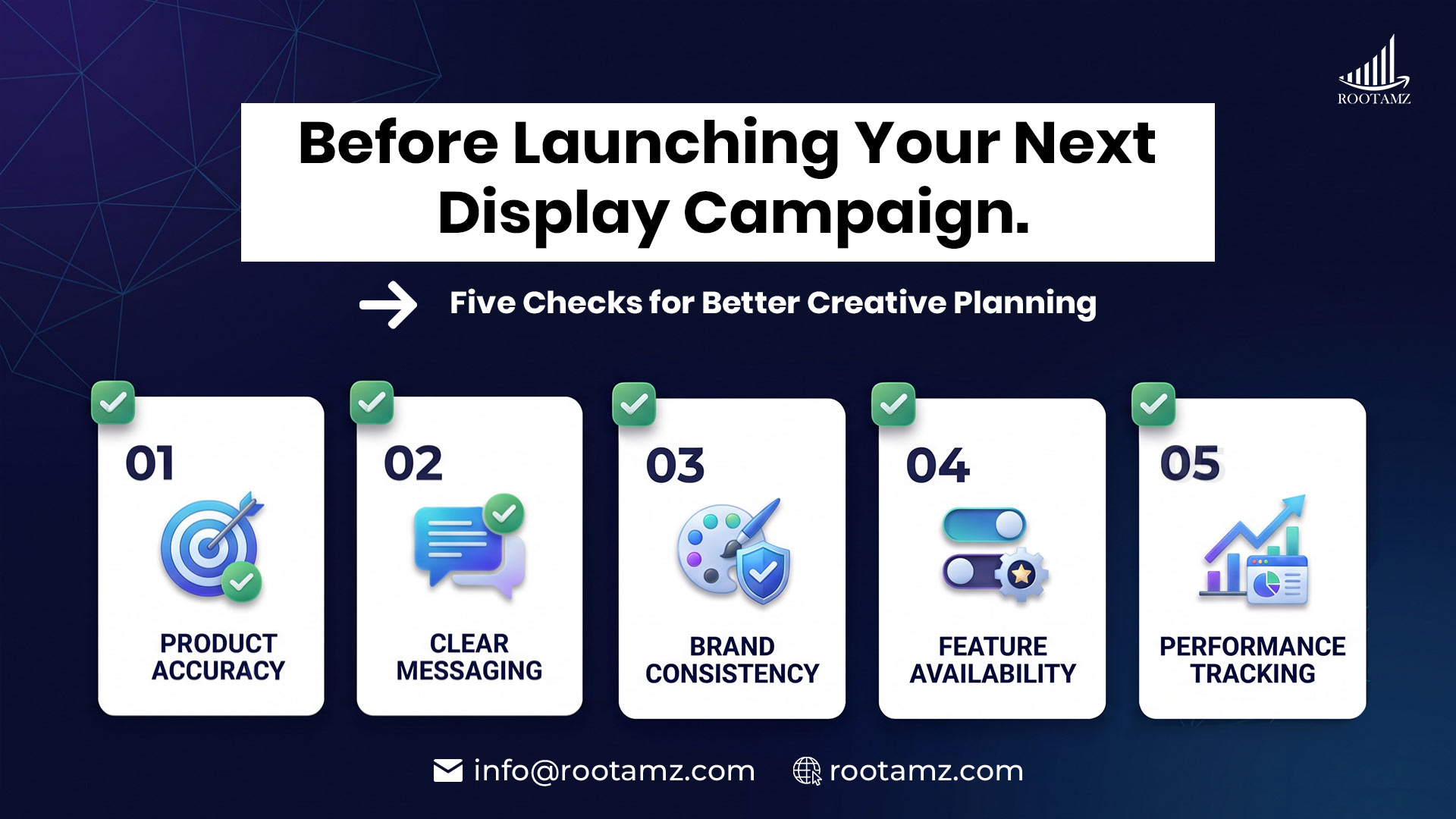
Follow these steps before launching:
Step 1: Select products. Choose products with accurate listings, clear benefits and sufficient inventory.
Step 2: Prepare creative assets. Review product images, lifestyle visuals, logos, brand colours and videos.
Step 3: Choose the right format. Decide whether static images, video or carousel advertisements best support your campaign objectives.
Step 4: Review AI-generated content. Check product accuracy, messaging, branding and creative variations.
Step 5: Launch and monitor. Track impressions, click-through rate, attributed sales, conversion rate and return on ad spend.
Step 6: Optimise performance. Use campaign data to identify effective creative combinations and improve future advertisements.
7. Common Mistakes Brands Should Avoid
Even advanced advertising technology cannot compensate for poor campaign planning.
Avoid these common mistakes:
Ignoring product accuracy: Review AI-generated images and copy before publishing.
Choosing formats without strategy: More complex advertisements do not automatically deliver better results.
Overlooking listing quality: Ensure product pages support the benefits communicated in advertisements.
Measuring clicks alone: Evaluate sales and profitability alongside engagement.
Ignoring inventory and pricing: These factors influence customer experience and campaign performance.
Assuming universal availability: Features vary by marketplace, placement and advertiser eligibility.
8. Does AI Reduce the Need for an Amazon Advertising Agency?
AI can simplify creative production, but successful marketplace advertising still requires strategic planning.
Brands need to manage campaign structures, targeting, budgets, product positioning and performance analysis.
At RootAMZ, brands and manufacturers can explore support for Amazon PPC management, advertising strategy, listing optimisation and marketplace account management.
The objective is to connect creative decisions with measurable business goals rather than simply adopting every new advertising feature.
How RootAMZ Can Help
As Amazon advertising evolves, businesses need a strategy that combines relevant creative, accurate listings, suitable targeting and continuous performance monitoring.
RootAMZ helps brands and manufacturers strengthen their marketplace presence through advertising and eCommerce growth solutions.
Visit RootAMZ or contact our team to discuss your marketplace goals.
Final Thoughts
Amazon Responsive eCommerce Creative is moving beyond traditional static advertisements. Video, multi-image carousels, adaptable layouts and AI-powered shopping experiences offer eligible advertisers new ways to connect with customers.
However, new formats alone do not guarantee better results.
The strongest approach combines accurate product information, relevant creative, effective campaign targeting and continuous performance analysis. Use AI to explore opportunities, apply human judgement to quality and compliance, and let campaign data guide your advertising decisions.
FAQ's
What is Amazon Responsive eCommerce Creative?
Amazon Responsive eCommerce Creative is an advertising solution that automatically builds responsive product-focused display advertisements using eligible product information and creative assets across supported placements.
What is new about Amazon Responsive eCommerce Creative in 2026?
Updates include richer media layouts, in-banner video, multi-image carousel formats, brand identity controls and AI-powered shopping prompts in eligible markets and placements.
How do Amazon Responsive eCommerce Creative video ads work?
Eligible advertisers can use supported video assets in display advertisements. The video helps communicate product features and benefits within compatible placements, subject to current format and marketplace availability.
What are Amazon carousel display ads?
Carousel display ads present multiple products in one swipeable advertising unit. Amazon's updated format supports three to six products where the feature is available.
Is Amazon Responsive eCommerce Creative available in the UK?
Amazon Ads lists Responsive eCommerce Creative and certain updated formats in the UK. Individual capabilities, such as conversational prompts, may have different availability requirements.