Most of seller choose one platform, get comfortable and stay there. That comfort costs them. A lot.
Here is the honest reality Amazon and eBay serve completely different types of buyers. Someone shopping on Amazon is usually in buy-mode. They know what they want, they trust the Prime badge and they are checking out within minutes. An eBay buyer? Totally different mindset. They are browsing, comparing, looking for a deal, often chasing something a bit harder to find. Listing on both is not redundancy. It is reach.
Multi marketplace selling is the strategy of push up the products across more than one platform at the same time managing listings, inventory and performance from a joined-up process rather than two separate ones. It is one of the fastest way to grow sales without sourcing a single new product.
Real Risk of Sticking to Just One Channel
Think about what happens if Amazon suspends your listing tomorrow. Or eBay flags your account. Or a policy change wipes out your keyword ranking overnight. If that one channel is your entire revenue stream, you are in serious trouble.
Sellers who treat Multi marketplace selling as a backup plan are usually the ones scrambling after a crisis. Sellers who build it into their growth strategy from day one are the ones with consistent revenue, even when one platform has a rough patch.
Beyond the safety net, there is plain mathematics. Amazon reaches hundreds of millions of US-based shoppers. eBay has a massive international buyer base, particularly strong in the UK, Germany and Australia. So the same product on both platform can reach twice the potential buyers with relatively the same effort once your process is set up properly.
What a Proper Amazon and eBay Selling Strategy Actually Looks Like
Get Your Inventory Under Control First
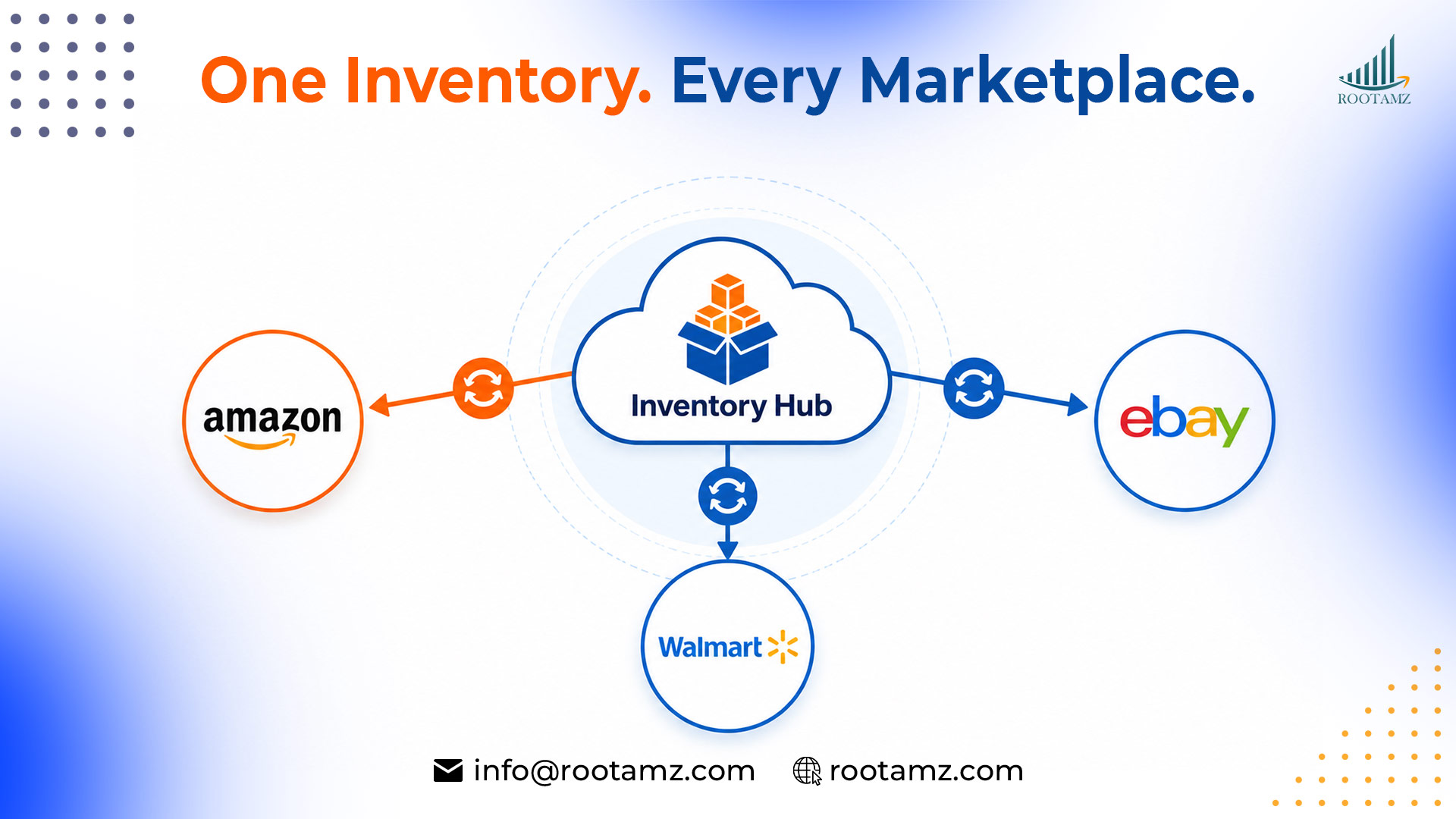
Before anything else, you need real-time inventory visibility across both channels. Selling the same unit twice once on Amazon, once on eBay is a support nightmare, a metric killer and an extremely preventable problem. Centralised inventory management keeps stock counts accurate on both sides so you never oversell or leave unsatisfied customers behind.
Stop Using the Same Listing on Both Platforms
Copying and pasting your Amazon listing onto eBay is tempting. It is also lazy, and it shows in your results. Amazon’s search algorithm cares about keywords in titles and bullets, backend search terms and review velocity. eBay’s Cassini engine puts more weight on item specifics, competitive pricing and seller ratings. A listing optimised for one will rarely perform well on the other without adaptation.
Price With Platform Psychology in Mind
People who buy things on Amazon do not really care about the price. What they really care about is how easy it is to get the thing and if they can trust the person selling it. If an Amazon buyer sees that they can get something delivered quickly with Amazon Prime and the thing has reviews and it is a brand they know they will pay a little extra for it without thinking about it. Your pricing on eBay needs to factor that in. Flat pricing across both channels usually means you are either undercharging on Amazon or losing to competitors on eBay.
Run Ads But Set Them Up Separately
Amazon PPC is genuinely one of the best-performing ad formats in eCommerce when managed well. Sponsored Products and Sponsored Brands and Display Ads are great because they show your products to people who are actually looking for them. This is similar to what eBays Promoted Listings do. They are both good to use. You need to have different budgets, for each one. You also need to think about how you want to bid on each one and how you want to make them better. Treating them as one campaign is a waste.
Measure Each Channel on Its Own Terms
A product doing brilliantly on Amazon might be a sluggish performer on eBay and vice versa. If you are looking at blended numbers only, you will never know where your money is actually working. Track conversion rates, ACoS, return rates and feedback scores per channel. That granularity is where actionable decisions come from.
How RootAMZ Helps You Scale Across Marketplaces
Managing Amazon and eBay properly is not a part-time task. In Between listing management, ad optimisation, account health management and creative idea, it adds on quickly, especially when someone trying to run an actual business at the same time.
RootAMZ is an eCommerce marketplace management agency that works with vendors, sellers, and manufacturers across Amazon, eBay & Walmart also in shopify platform. If Multi marketplace selling is where you want to go, they handle the operational section so you can focus on the bigger picture.
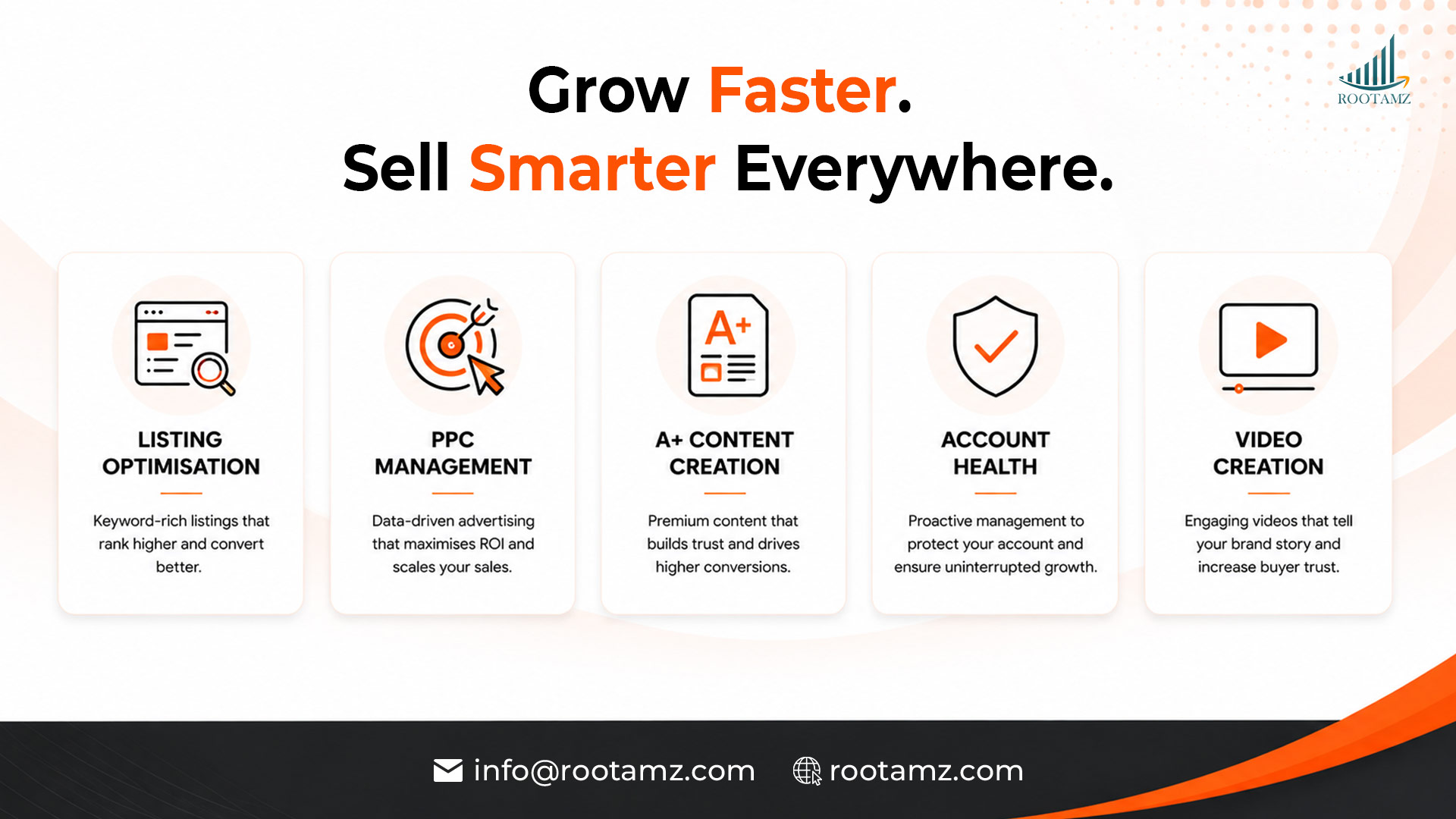
Services RootAMZ provides:
Amazon Vendor Central Management: PO management, shortage claims, chargeback recovery, retail strategy.
Amazon Seller Central Management: Complete account managemnt, listing management, inventory and account health.
Amazon PPC Management: Target ad campaigns that will reduce ACoS and increase return on ad spend.
Amazon Listing Optimisation: ProperKeyword research and content writing to rank and convert.
Amazon A+ and Premium A+ Content: Rich brand content that builds trust and increase conversion rates.
Amazon Brand Store Design: Custom storefronts that gives a brand professional presence on Amazon.
eBay Account Management: Account setup, listing creation, performance tracking and buyer engagement.
Walmart Account Management: Walmart store setup, shelf design and ongoing management.
Product Infographics and Video Creation: Visual assets built specifically for Amazon, eBay and Walmart listings.
Whether you are launching your first cross-channel push or already selling on multiple platforms and looking to tighten things up, RootAMZ gives you experienced hands on both sides of the process.
FAQ’s
What exactly is multi marketplace selling and how does it benefit my business?
It means actively listing and managing your products on more than one platform - like Amazon and eBay together
Do I need separate inventory for Amazon and eBay?
A: No, you manage one shared inventory pool and use syncing tools or a management partner to keep stock levels accurate across both platforms in real time.
Should my prices be the same on Amazon and eBay?
A: Not necessarily, Amazon buyers often tolerate slightly higher prices for convenience and trust, while eBay shoppers are more price-sensitive.
Does RootAMZ manage both Amazon & eBay accounts for sellers?
A: Yes, RootAMZ offers full account management for both Amazon (Vendor and Seller Central) and eBay, covering everything from listings and PPC to creative assets and account health.
Is multi marketplace selling realistic for small brands with limited resources?
A: Yes, the right management partner or tools in place, even smaller brands can run Amazon & eBay channels simultaneously without significantly increasing their internal workload.