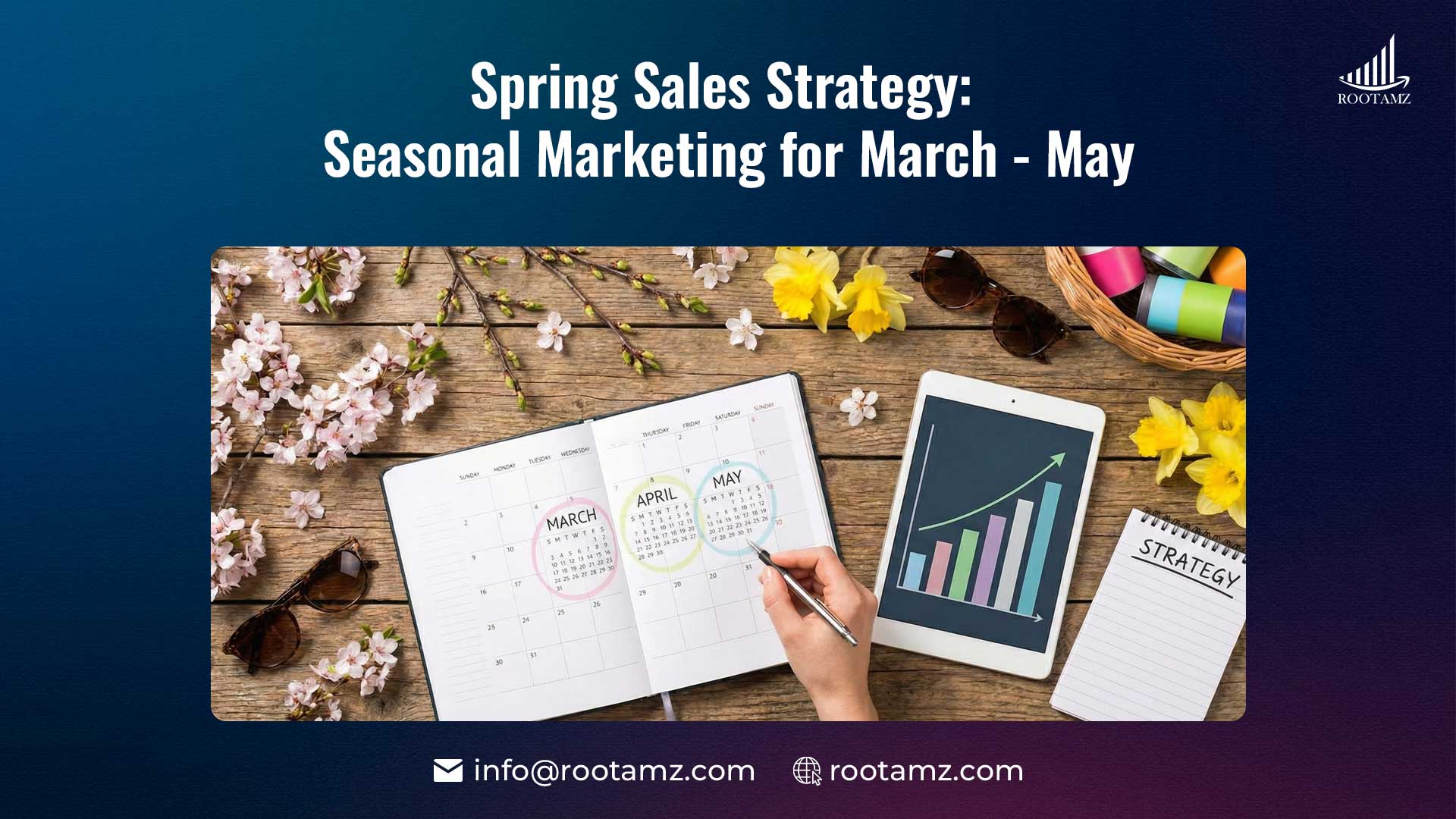
Seasonality is not a trend. It’s a predictable revenue opportunity.From March to May, consumer behaviour shifts dramatically across global eCommerce marketplaces. Warmer weather, tax refunds (in key markets), spring cleaning habits, outdoor activities, gifting occasions & pre-summer purchases create a powerful buying window.
Yet most sellers approach spring passively.
They run the same ads.
Keep the same creatives.
Use the same keywords.
And then wonder why competitors outperform them.
At RootAMZ, we treat seasonal marketing as a structured growth engine – not a temporary campaign adjustment.
In this guide, we break down how manufacturers, sellers, distributors & brands can build a profitable Spring Sales Strategy across Amazon & other marketplaces & how RootAMZ ensures you capture maximum ROI during March-May.Let’s build momentum.
Why Spring (March-May) Is a Critical Sales Window
Spring sits between Q1 post-holiday slowdown & summer demand spikes. It’s a transition quarter – & transition periods create opportunity.
Consumer behaviours during this period include:
✔ Spring cleaning & home organization
✔ Outdoor & garden purchases
✔ Fitness & wellness re-engagement
✔ Travel & vacation prep
✔ Fashion & seasonal wardrobe refresh
✔ Mother’s Day gifting
✔ Graduation preparation
For sellers, this means:
- New keyword demand patterns
- Higher browsing behavior
- Shifting conversion rates
- Increased promotional competition
If your listings & PPC campaigns are not seasonally aligned, you are invisible to high-intent buyers.
Step 1: Seasonal Keyword Strategy Adjustment
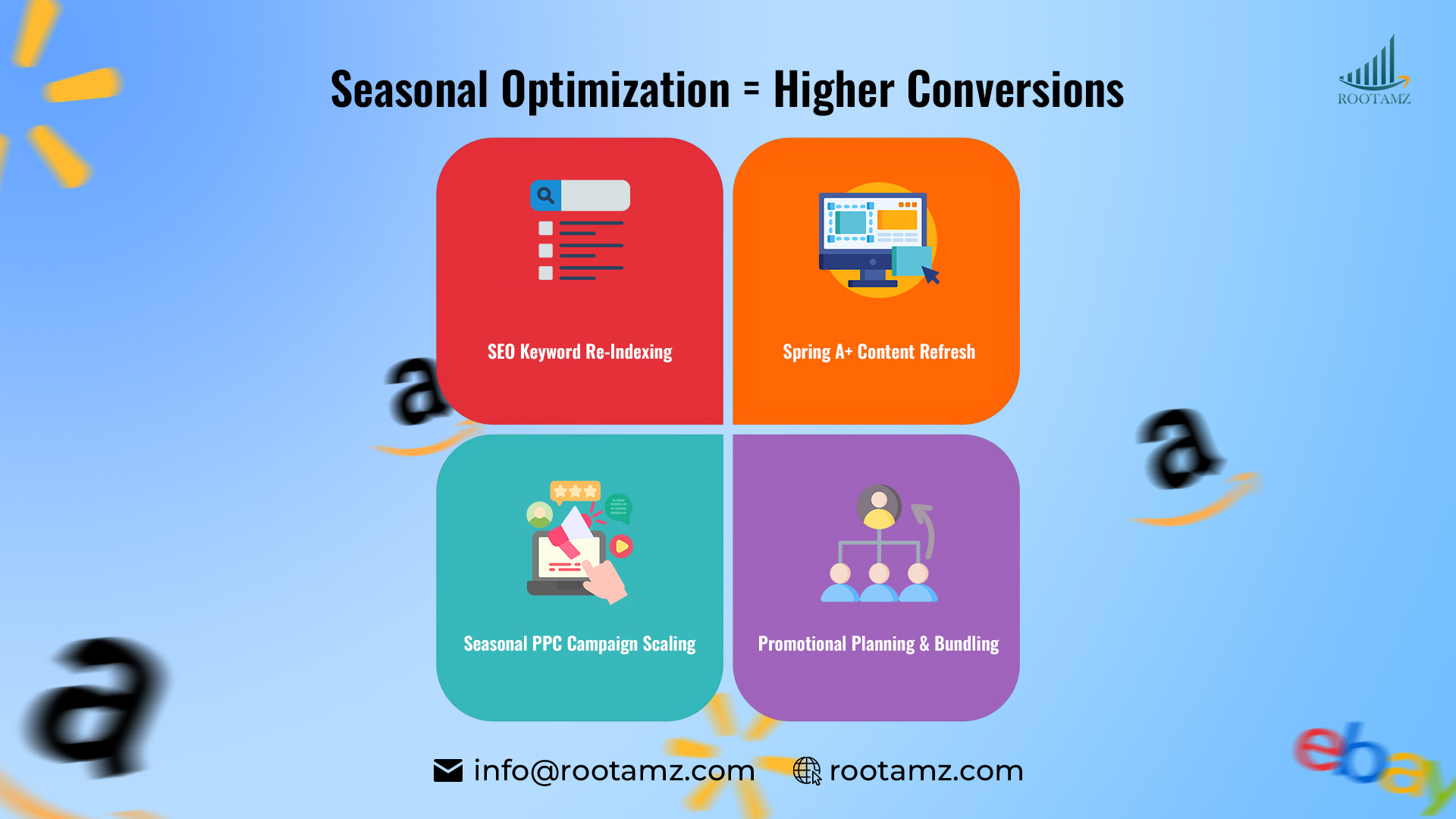
Spring is a keyword-driven opportunity.
Search intent changes during this period:
- “Spring decor ideas”
- “Outdoor patio furniture”
- “Garden tools set”
- “Mother’s Day gift for mom”
- “Spring fitness equipment”
Most sellers fail because they:
🚫 Do not update backend search terms
🚫 Ignore long-tail seasonal keywords
🚫 Keep generic PPC targeting
🚫 Miss trending category spikes
At RootAMZ, we conduct:
✔ Seasonal keyword research audits
✔ Competitor keyword gap analysis
✔ Search term expansion
✔ Sponsored Products restructuring
✔ Sponsored Brands seasonal messaging
Seasonal keywords increase discoverability – but only if implemented strategically.
Step 2: Refresh Your Creative & Listing Content
Spring is visual.
Your listing should reflect seasonal relevance.
Update:
- Main images (where appropriate)
- Lifestyle images (outdoor, bright settings)
- A+ Content banners
- Amazon Storefront seasonal themes
- Product copy with seasonal messaging
For example:
Instead of “All-Weather Storage Box”
Try: “Perfect Spring Organisation Solution for Outdoor & Garage Spaces”
Small messaging shifts can dramatically increase click-through rate (CTR).
RootAMZ helps brands:
✔ Align creative assets with seasonal trends
✔ Redesign Amazon Storefront themes
✔ Optimize A+ Content storytelling
✔ Improve conversion rate through visual alignment
Seasonal marketing is not just about discounts – it’s about relevance.
Step 3: Spring PPC Budget Reallocation
March-May typically sees increased competition in categories like:
- Home & Kitchen
- Garden & Outdoor
- Fitness
- Beauty & Wellness
- Seasonal fashion
If your PPC budget remains static, you lose impression share.
At RootAMZ, we apply:
✔ Budget scaling during high-traffic weeks
✔ Dayparting analysis
✔ Branded + non-branded campaign split
✔ Competitor conquest targeting
✔ Seasonal keyword isolation
We also monitor:
- TACOS (Total Advertising Cost of Sales)
- Conversion rate trends
- Inventory forecasting
- Campaign elasticity
The goal is not to overspend – it’s to capture profitable seasonal demand.
Step 4: Inventory Planning & Demand Forecasting
Spring campaigns without inventory planning are dangerous.
Running aggressive promotions without stock leads to:
🚫 Lost Buy Box
🚫 Organic ranking drop
🚫 Increased storage fees
🚫 Poor account health metrics
RootAMZ aligns seasonal campaigns with:
✔ Sales forecasting
✔ FBA restock limits
✔ Vendor PO tracking
✔ Replenishment cycle planning
✔ Warehouse allocation strategy
Seasonal success requires operational readiness.
Step 5: Promotion Strategy for March-May
Spring promotional tactics may include:
- Limited-time coupons
- Percentage-off discounts
- Bundled SKUs
- Mother’s Day gift packaging
- Spring sale landing pages
But promotions must protect margins.
At RootAMZ, we evaluate:
✔ Contribution margin
✔ Ad spend impact
✔ Price elasticity
✔ Competitor discount patterns
✔ Inventory aging
We ensure promotional campaigns increase revenue – not just sales volume.
Step 6: Marketplace Expansion During Spring
Spring is also a strategic time to expand.
Many brands explore:
- Amazon EU marketplaces
- Walmart Marketplace
- eBay seasonal listings
- D2C website seasonal campaigns
RootAMZ manages:
✔ Cross-marketplace listing syndication
✔ International keyword localization
✔ Regional seasonal trend analysis
✔ Advertising synchronisation
Because seasonal marketing should be omnichannel.
Common Mistakes Brands Make During Spring
🚫 Waiting until April to plan
🚫 Ignoring Mother’s Day search volume
🚫 Not refreshing creatives
🚫 Running ads without seasonal keywords
🚫 Over-discounting without margin calculation
🚫 Failing to forecast inventory
Seasonal revenue doesn’t happen by accident. It requires proactive execution.
How RootAMZ Builds a Complete Spring Growth Engine
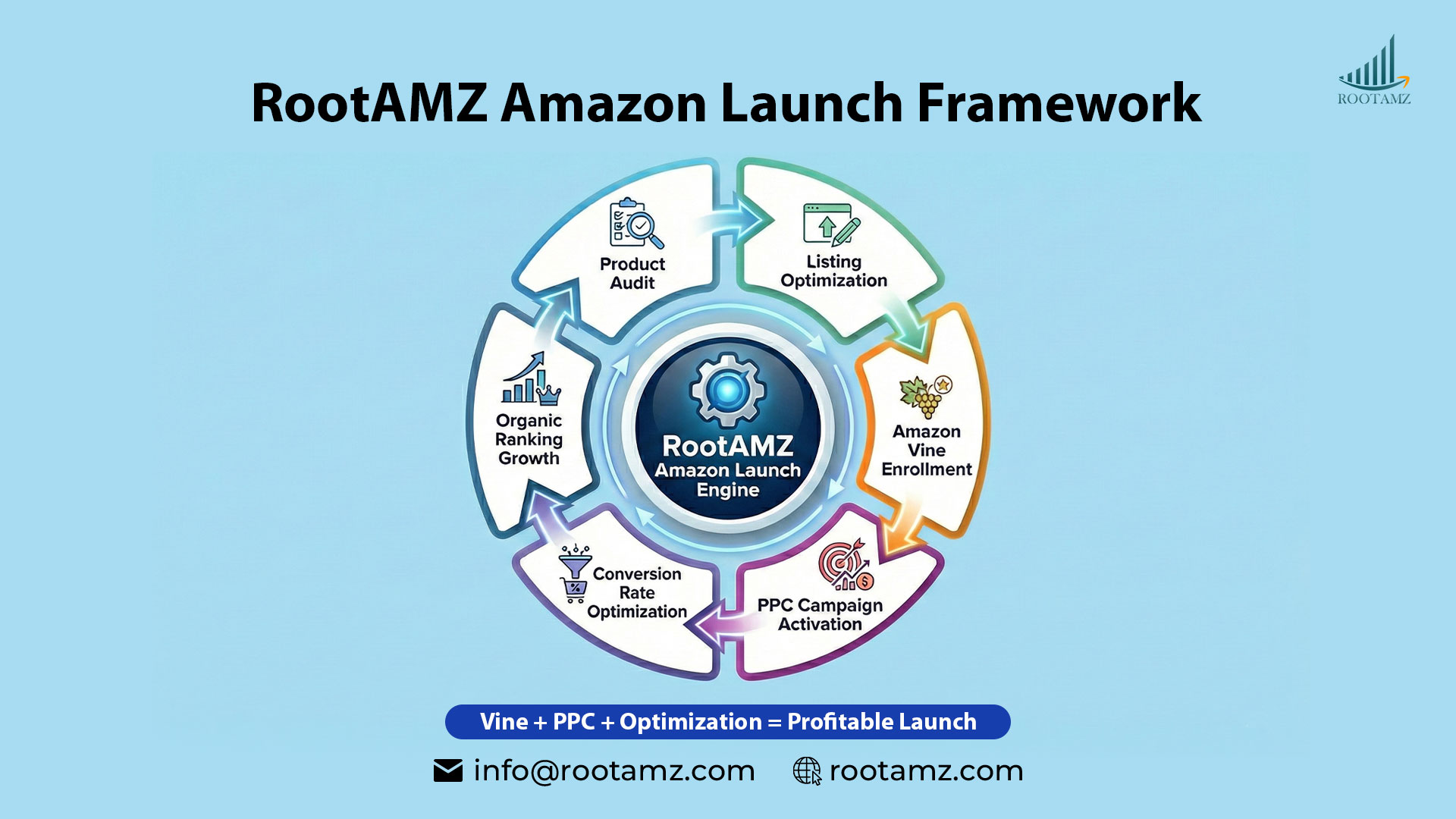
At RootAMZ, seasonal marketing is part of our integrated marketplace management model.
We manage:
✔ Amazon account optimization
✔ PPC restructuring
✔ Seasonal keyword research
✔ Creative & A+ content refresh
✔ Inventory & Vendor Central coordination
✔ Performance monitoring dashboards
For manufacturers & distributors, this means:
You focus on supply chain & product availability.
We ensure demand capture & marketplace growth.
Spring is not just another quarter – it is a controlled opportunity window.
Spring Sales Strategy Checklist (Quick Recap)
Before March begins, ensure you have:
✔ Seasonal keyword updates
✔ Refreshed creative assets
✔ Updated PPC structure
✔ Inventory forecast alignment
✔ Promotion strategy defined
✔ Storefront seasonal theme live
If even two of these are missing, revenue potential decreases.
That’s where RootAMZ steps in – as your marketplace performance partner.
Final Thoughts: Seasonality Favors the Prepared
March-May is a bridge quarter.
Brands that prepare:
- Increase visibility
- Capture seasonal demand
- Improve conversion rates
- Strengthen organic ranking
- Build Q2 momentum
Brands that delay:
- Compete at higher CPC
- React instead of lead
- Miss seasonal search spikes
Seasonal marketing should be engineered with data, forecasting & marketplace expertise.
If you want your brand to dominate the Spring sales cycle across Amazon & other marketplaces, it’s time to implement a structured strategy.
Reach out to RootAMZ & let our team build a seasonal marketplace growth plan tailored to your business.
FAQ’s
When should I start planning my Spring sales strategy?
Ideally 6-8 weeks before March. Keyword research, inventory planning & creative updates require preparation time.
Which product categories perform best during Spring?
Home & Kitchen, Garden, Outdoor, Fitness, Beauty, Fashion & gifting categories often see increased demand.
Should I increase my PPC budget during Spring?
Yes, but strategically. Budget scaling should align with seasonal keyword trends & conversion rate improvements.
How does RootAMZ help with seasonal campaigns?
RootAMZ conducts seasonal keyword research, restructures PPC campaigns, updates creatives, manages inventory forecasting & monitors profitability across marketplaces.
Can small sellers benefit from seasonal marketing?
Absolutely. Even smaller catalogs can capture seasonal demand through keyword optimization, targeted PPC & structured promotions.