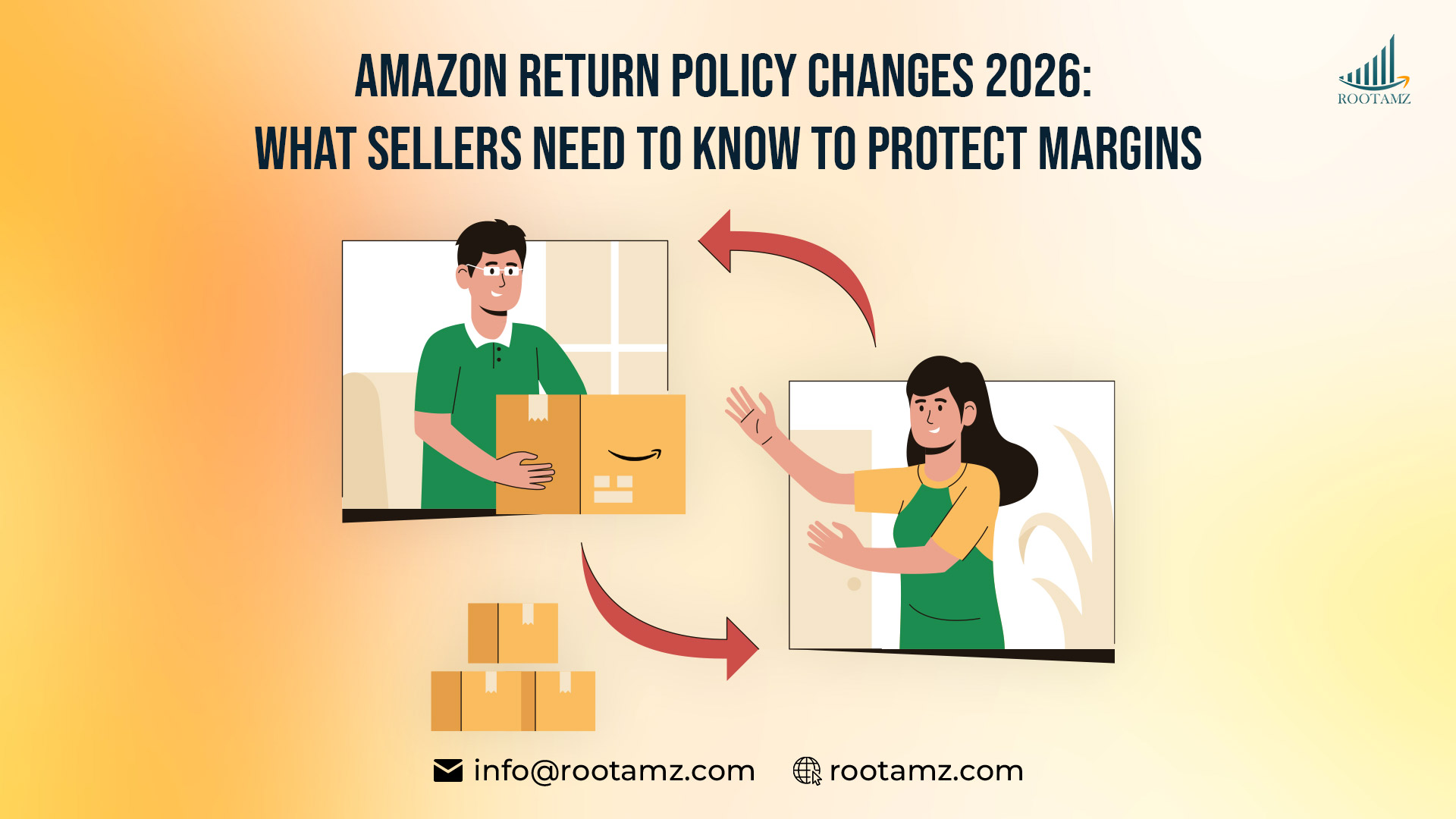
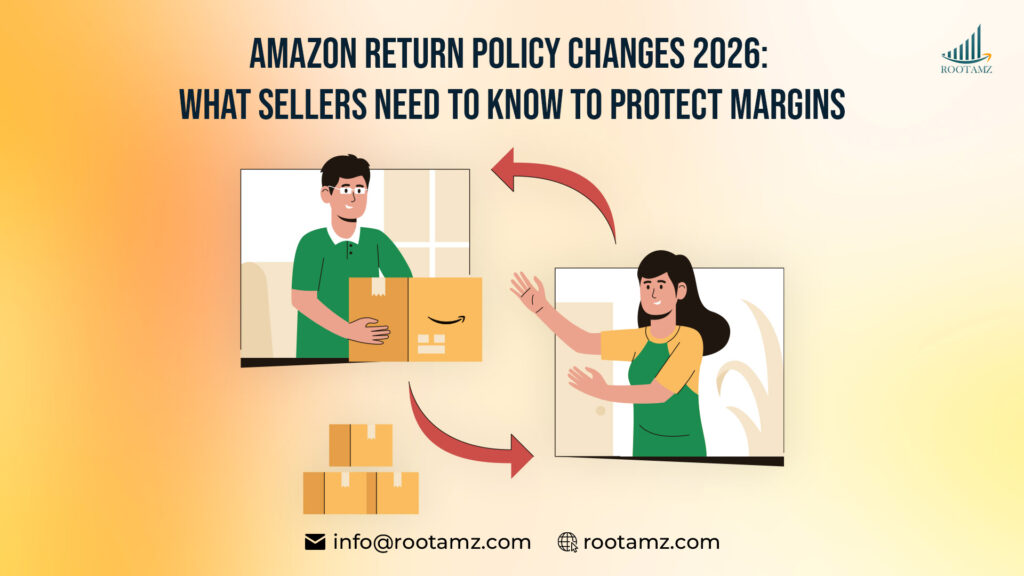
Amazon Return Policy Changes 2026: What Sellers Need to Know to Protect Margins
f you have been selling on Amazon for a while, you know how fast the rules can shift. But 2026 brought changes to the Amzon return policy that many sellers still have not fully priced into their margins and that gap is quietly hurting profitability. At RootAMZ & Amazon Ads Verified Partner we help brands, on Amazon, Walmart and eBay every day.
Amazon Return Policy
One big problem we are talking to clients about now is the increasing cost of returns.
Here is a simple explanation of what changed why it is important and what you can do about it.
1. Returns Processing Fees Now Apply to Almost Every Category
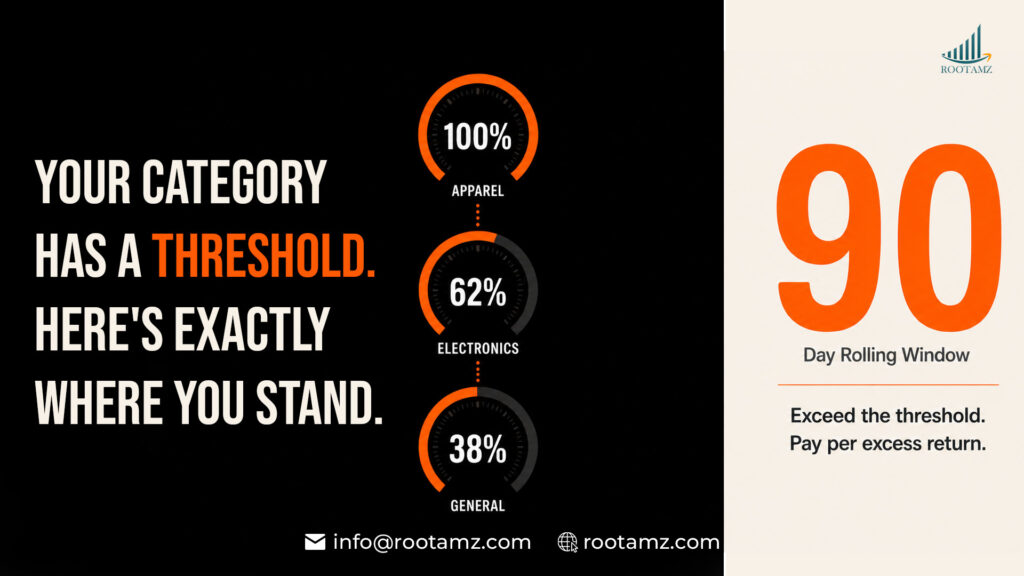
This is the big one. Before mid-2024, Amazon’s returns processing fee was limited to five product categories apparel, watches, jewellery, shoes, and luggage. Starting in 2026, the fee structure expanded platform-wide. If your return rate crosses a category-specific threshold over a rolling three-month window, Amazon charges you a per-unit fee on every return above that line.
For apparel and footwear sellers, the threshold is zero meaning every single return carries a fee, no matter how low your return rate is. Electronics, cameras, and watches are also in high-exposure territory. RootAMZ recommends pulling your trailing 90-day return rate from Seller Central and comparing it against Amazon’s category threshold table immediately if you have not already done so.
2. The High-Value Item Exemption for FBM Is Gone
If you sell high-ticket items through Fulfilled by Merchant (FBM) think electronics, jewellery, cameras, or designer goods this change hits hard. As of February 8, 2026, Amazon eliminated the high-value return exemption from its prepaid return label program.
All FBM sellers in the US must now use Amazon-generated prepaid return shipping labels regardless of product price. Return shipping costs for these categories typically run between $10 to $60 per unit depending on size and weight. At a 15% return rate, that alone can add $1.50 to $9 per unit sold. The RootAMZ team advises high-value FBM sellers to revisit their pricing models and run a serious FBA-vs-FBM cost comparison for each affected SKU.
3. FBM Sellers Get a Slightly Longer Refund Processing Window
Not everything in 2026 worked against sellers. Effective January 26 2026 Amazon made a change to how refund handled for orders fulfilled by merchants. The refund processing window for these orders is now four calendar days.
This change gives merchants time to check returned items. They can now apply restocking fees before giving a refund. Merchants have time to inspect and restock items. This helps merchants, with their inventory and refund process.
The Guided Refund Workflow (GRW) is your friend here use it to document item condition, upload evidence, and apply appropriate restocking fees before closing the loop. Failing to process within the four-day window can trigger automatic refunds, which typically removes your eligibility for SAFE-T reimbursement claims. RootAMZ helps clients set up SOP-driven return workflows so these deadlines never slip through the cracks.
4. FNSKU-Level Monitoring Now Matters More Than Ever
Amazon evaluates return rates and low-inventory fees at the FNSKU (variant) level, not the overall ASIN. This means a slow-selling size or colour can trigger extra costs even if the product performs well overall. To avoid penalties, you need to closely monitor and manage each variant’s inventory, sales, and return performance. Sellers with wide catalogs in apparel, beauty, or multi-variant electronics need to move beyond parent-ASIN reporting.
This is an area where the team at RootAMZ has been proactive in building variant-level tracking dashboards for clients. Getting caught off guard by a single underperforming SKU draining margin from an otherwise healthy line is an avoidable problem but only if you can see it coming.
5. Listing Quality Is Now a Direct Fee Liability
Returns were always a customer experience issue. In 2026, they are also a direct cost trigger. Amazon return policy changes how you should think about product listings entirely. Listings that set inaccurate expectations whether through misleading imagery, vague sizing information, or over claimed product benefits now generate trackable financial penalties.
RootAMZ‘s listing optimisation and Amazon A+ content services exist precisely for this reason. When buyers know exactly what they are getting before they purchase, return rates drop. Clean, accurate size charts, demonstration videos, and realistic product photography are no longer optional extras they are margin protection tools. Our product infographics and brand store design teams build these assets with that commercial goal in mind.
How RootAMZ Helps Sellers Stay Ahead
RootAMZ is a full-service eCommerce management agency working across Amazon, Walmart, and eBay. Beyond navigating return policy changes, RootAMZ provides:
- Amazon Seller Central & Vendor Central Management: end-to-end account oversight including account health monitoring and policy compliance.
- Amazon PPC Management: data-driven ad strategies that lower ACoS and protect margins.
- Listing Optimisation & A+ / Premium A+ Content: reducing return-triggering content gaps across your catalog.
- Product Infographics & Video Creation: visual assets that set accurate buyer expectations and cut return rates.
- Brand Store Design: immersive storefronts on Amazon and Walmart that convert browsers into buyers.
- Walmart & eBay Account Management: channel diversification with expert hands managing each marketplace.
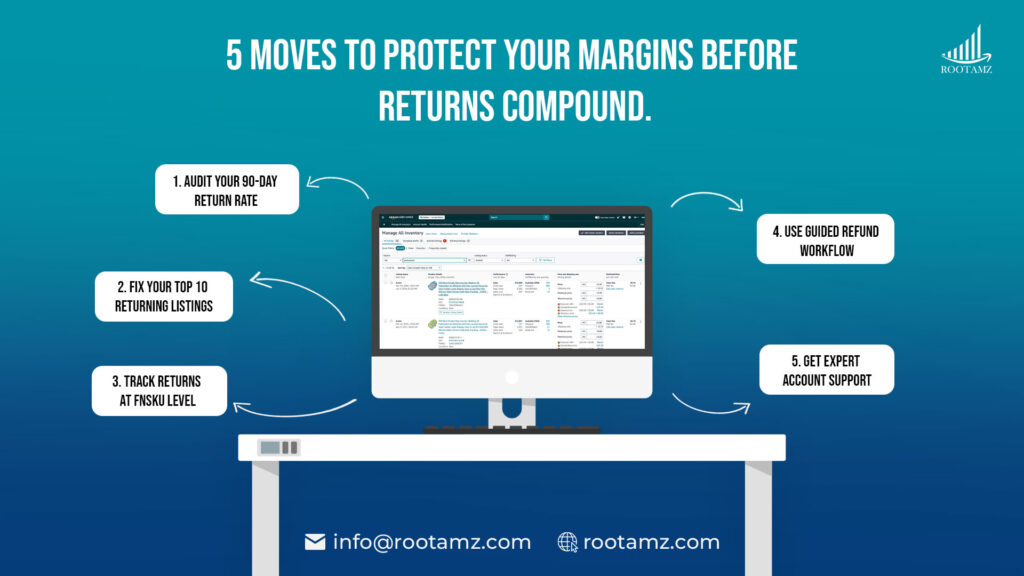
✅ How can protect your margins going into the second half of 2026.
FAQ’s
I sell through FBM. How does the end of the high-value exemption affect my costs?
All FBM orders must now use Amazon prepaid return labels, regardless of price. Expect shipping costs between $10–$60 per return depending on size.
What is the Guided Refund Workflow and should I be using it?
Yes, absolutely-it lets you document return condition, apply restocking fees, and upload evidence before issuing a refund, which protects your SAFE-T claim eligibility if a dispute arises.
Can RootAMZ help manage our Amazon account health under these new return policies?
Absolutely, RootAMZ's Amazon Account Health Management service monitors return rates at the FNSKU level, flags threshold risks early.
How quickly do I need to process FBM refunds under the new rules?
You now have four calendar days from the return being accepted-missing that window triggers an automatic refund and typically removes your ability to file a SAFE-T claim.