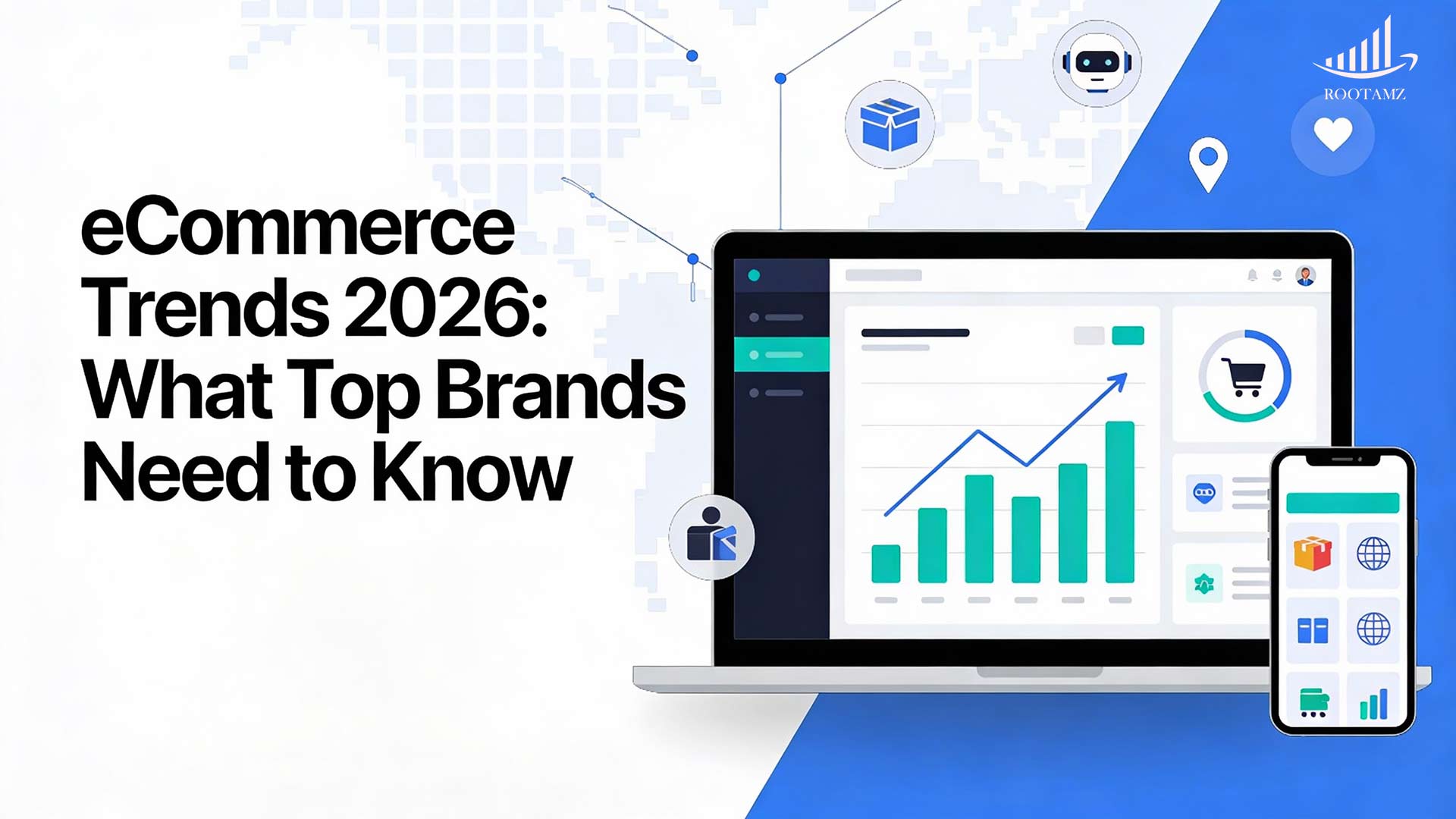
eCommerce Trends 2026: What Top Brands Need to Know
The eCommerce landscape is shifting faster than ever before. What worked in 2024 is already outdated. What’s working now might not survive 2026.
For brands selling online, especially on Amazon, the next 12 months will separate the survivors from the thrives. The ones who adapt early will own market share; the ones who wait will scramble to catch up.
This isn’t about predicting the future. It’s about understanding the momentum that’s already building & positioning your brand to ride the wave instead of getting crushed by it.
As an Amazon Ads Verified Partner, RootAMZ helps brands navigate this new reality with data-driven strategies across Amazon Vendor & Seller Central, Walmart We & other marketplaces.
Let’s break down the eCommerce trends that matter most heading into 2026 & what you need to do about them right now.
1. Algorithm Intelligence Is No Longer Optional
Amazon, Google Shopping, TikTok Shop & every major marketplace are running on increasingly sophisticated algorithms that reward one thing above all else: relevance. The days of gaming the system with keyword stuffing, review manipulation, or PPC overspending are over, as platforms now detect artificial patterns & penalise shortcut tactics.
What’s changing:
- Search algorithms evaluate how well your content matches real buyer intent, not just keyword density.
- They track long-term performance patterns conversion rates, returns & click-through rates rather than short-lived spikes.
- They reward brands that bring value to the ecosystem through clean account health, strong seller authority & consistent delivery.
What you need to do:
- Stop thinking about optimization as a one-time project; treat it as an ongoing operating system.
- Track relevance signals (CTR, conversion rate, bounce rate), conversion stability & customer satisfaction like core KPIs.
- Build content that solves problems, answers questions & guides decisions so product pages feel human-first, algorithm-friendly second.
How RootAMZ helps: As an Amazon Ads Verified Partner, RootAMZ continually aligns listing optimization, SEO & PPC structures with the latest A10-style ranking factors to keep your products relevant & visible.
2. External Traffic Is Becoming Your Competitive Advantage
Most sellers still underestimate how much marketplaces value external traffic. Amazon, Walmart & others increasingly reward brands that bring buyers from outside channels because it reduces their acquisition costs & signals strong off-platform demand.
What’s changing:
- External traffic from Google, social platforms, influencers & blogs is now a major input in ranking models like Amazon’s A10.
- Sellers winning in 2026 will run multi-channel funnels: Google Shopping feeds, TikTok Shop, Instagram Shopping, Pinterest SEO & influencer-led flows all driving back to marketplace listings.
- Brand search volume, branded queries & off-Amazon buzz increasingly act as “authority” signals in algorithms.
What you need to do:
- Stop treating Amazon as an isolated channel; connect search, social, content & creators into one acquisition engine.
- Use landing pages, educational content & comparison guides to warm traffic before sending them to your product listings.
- Partner with micro-influencers & niche creators whose audiences trust their recommendations.
How RootAMZ helps: RootAMZ designs & manages external traffic funnels search, social & influencer flows that are tightly integrated with Amazon & other marketplaces, maximising both ranking gains & ROAS.
3. Brand Authority Determines Who Gets Visibility
Marketplaces are done with fly-by-night sellers who disappear after a wave of complaints. Algorithms like Amazon’s A10 systematically identify & reward legitimate, stable brands.
What’s changing:
- Brand registry, trademarks, IP protection & enforcement now directly influence your visibility & protection on Amazon.
- Sales consistency, review stability, order defect rate & policy compliance form your “seller authority” profile.
- New or unproven brands face higher scrutiny & must prove reliability over time before earning prime search real estate.
What you need to do:
- Invest early in trademarking & brand registry to protect your catalogue & unlock enhanced brand tools.
- Maintain clean performance: low ODR, minimal late shipments & prompt resolution of disputes.
- Monitor hijackers, IP infringements & listing changes aggressively & resolve them quickly.
How RootAMZ helps: RootAMZ’s Amazon Vendor & Seller Management services include brand registry support, IP enforcement guidance & account health monitoring so your “brand authority score” keeps trending upward.
4. Conversion Stability Beats Conversion Spikes
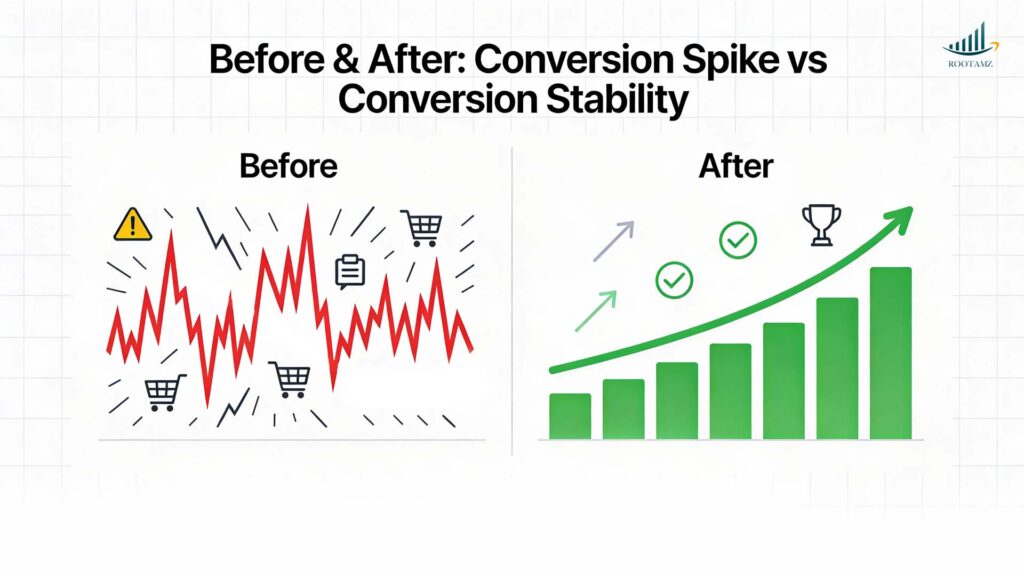
The old launch playbook flash promotions, giveaway spikes & review swaps is being phased out by smarter algorithms. Today, volatility is a red flag.
What’s changing:
- Algorithms distinguish between organic, sustainable demand & artificial, short-term surges in sales or reviews.
- Sudden, unexplained spikes can trigger suspicion, throttled visibility, or outright suppression.
- Platforms favor products with stable conversion rates, low return rates & consistent, authentic review growth.
What you need to do:
- Adopt progressive keyword ranking strategies rather than explosive launch tactics.
- Track month-over-month conversion trends & fix creative or offer issues before scaling spend.
- Implement structured A/B testing for titles, images, pricing & A+ content to keep improving incrementally.
How RootAMZ helps: RootAMZ builds long-term conversion frameworks combining CRO, A/B-tested creatives & disciplined campaign scaling to keep your performance steady & trustworthy in the eyes of the algorithm.
5. Inventory Intelligence Is a Ranking Factor
Inventory is no longer just an operations concern; it is a visibility lever. Algorithms cannot afford to promote products likely to go out of stock.
What’s changing:
- Low or inconsistent inventory triggers pre-emptive ranking drops before you hit zero stock.
- Reliable in-stock rates & predictable replenishment patterns are now baked into ranking & Buy Box logic.
- Stockouts create a painful loop: you run out, lose rank, spend heavily to recover, then risk overstocking in reaction.
What you need to do:
- Make forecasting as strategic as your marketing, accounting for seasonality, promotions & lead times.
- Watch daily sell-through, set reorder thresholds & maintain safety stock for fast movers & peak seasons.
- Align marketing intensity with inventory realities so you never push products you can’t keep in stock.
How RootAMZ helps: RootAMZ’s FBA & inventory management services integrate sales velocity, promotions & seasonal patterns to build smarter replenishment cycles that protect both ranking & cash flow.
6. Customer Experience Signals Are Everywhere
Your product page is only one piece of the ranking puzzle. Algorithms now evaluate the whole journey, from expectation to satisfaction.
What’s changing:
- Return rates, reasons for returns & refund behavior play heavily into product & seller quality scoring.
- Review patterns, Q&A responsiveness & customer message response times influence trust & visibility.
- Repeated complaints about the same issue (sizing, quality, packaging) can weigh more than your keyword or ad optimization.
What you need to do:
- Fix product & packaging issues before scaling traffic; otherwise, you will only accelerate negative feedback.
- Use Q&A, A+ content & comparison charts to set accurate expectations & reduce confusion-led returns.
- Implement automated post-purchase flows to collect feedback, encourage honest reviews & resolve issues quickly.
How RootAMZ helps: RootAMZ supports review & feedback management, Q&A optimisation & account health interventions so CX issues are identified early & turned into opportunities to improve, not penalties.
7. PPC Efficiency Directly Impacts Organic Ranking
Paid & organic are no longer separate worlds. Your ad performance is now one of the clearest relevance signals you send to the algorithm.
What’s changing:
- Strong ad CTR, conversion rates & efficient spend signal that your product matches the search intent behind your keywords.
- Poor PPC (high spend, low conversion) suggests misalignment & platforms respond by reducing both paid efficiency & organic visibility.
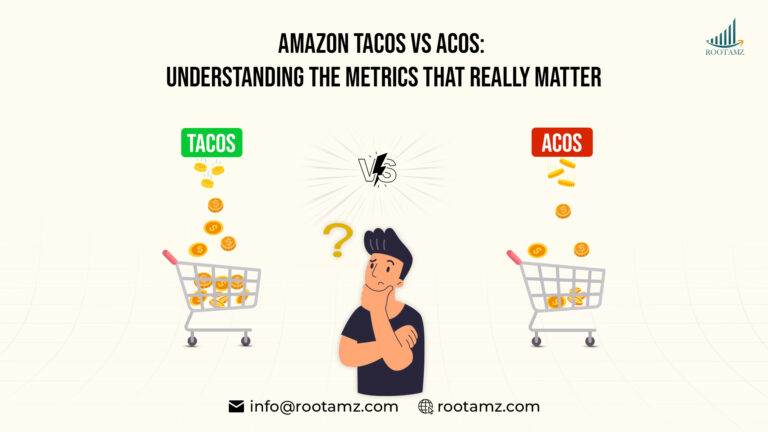
- TACoS is becoming a strategic metric: brands watch total sales versus ad spend to balance performance & profitability.
What you need to do:
- Use PPC data to discover & double down on your highest-intent, highest-ROI keywords.
- Structure campaigns to focus on profitable placements rather than chasing vanity impressions.
- Continuously optimize bids, search terms & creatives instead of “set & forget” campaigns.
How RootAMZ helps: As an Amazon Ads Verified Partner, RootAMZ uses advanced tools & weekly optimization cycles to align PPC with organic ranking goals controlling TACoS while improving visibility.
8. Marketplace Diversification Is Risk Management
Amazon remains the core marketplace, but a single-channel dependency is now a strategic risk. Algorithm shifts, suspensions, or policy updates can hit overnight.
What’s changing:
- Walmart Marketplace, TikTok Shop & other vertical marketplaces are growing quickly & capturing meaningful share in their segments.
- Brands diversified across Amazon, Walmart, D2C & social commerce are more resilient & can capture demand across different discovery paths.
- Each marketplace demands its own approach content formats, ad tools, logistics rules but shares common foundations in data, CX & performance.
What you need to do:
- Identify the 2-4 platforms that best match your category & audience instead of trying to be everywhere.
- Reuse strategic building blocks great product data, brand storytelling & CX systems adapted to each channel’s nuances.
- Standardize internal reporting so you see multi-channel performance clearly rather than siloed dashboards.
How RootAMZ helps: RootAMZ supports growth across Amazon, Walmart & other marketplaces, using one integrated strategy with channel-specific execution for catalog, ads & operations.
2026 eCommerce Success Framework by RootAMZ
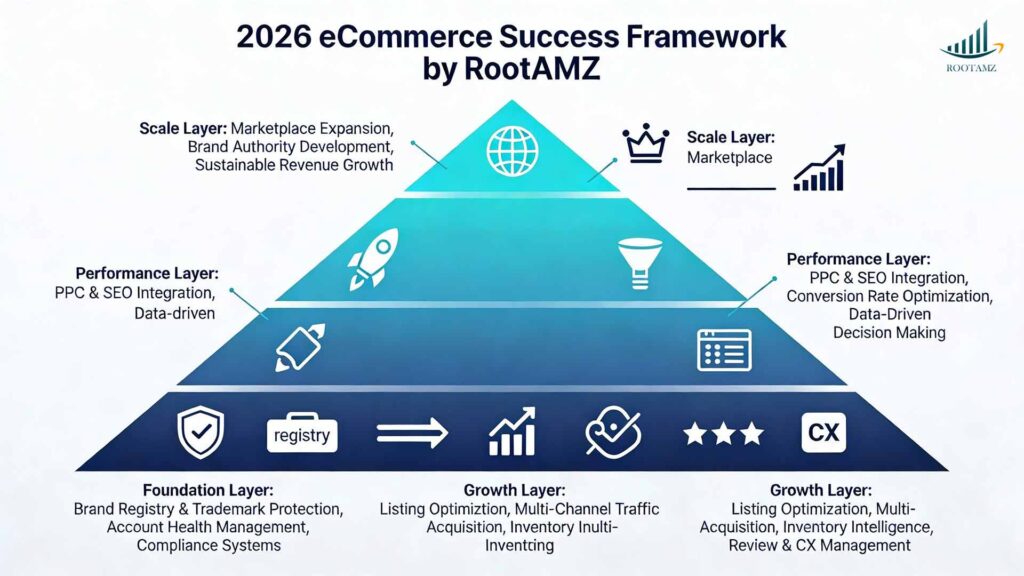
RootAMZ uses a structured 2026 eCommerce Success Framework to turn trends into predictable growth for brands across Amazon, Walmart & other marketplaces. It follows five focused stages:
Audit & Insight – Deep review of catalog, performance, CX, PPC & inventory to find gaps & quick wins.
Strategic Blueprint – Channel-wise growth plan with clear priorities for listings, authority, traffic & CX.
Implementation – Execution of listing optimization, PPC setup, CX workflows & inventory planning in one coordinated motion.
Optimization – Continuous A/B testing & data-led refinements to improve conversion, TACoS & ranking stability.
Scale & Diversification – Expansion into additional marketplaces & social/social-commerce plays once the core system is profitable & stable.
The Bottom Line: Professionalism Wins
Every trend in this article points to the same conclusion: eCommerce in 2026 rewards brands that operate professionally.
The platforms want to work with sellers who:
- Prioritize customer experience over short-term gains
- Build brand equity instead of chasing quick wins
- Maintain consistent performance & compliance
- Bring value to the marketplace ecosystem
- Think strategically about long-term growth
The amateur tactics that worked five years ago keyword stuffing, review manipulation, inventory games, grey-hat promotions are not just ineffective now. They’re actively punished.
This shift is good news for serious brands. It means the playing field is tilting toward those who do things right. The competition from low-quality sellers diminishes every year as algorithms get better at identifying & suppressing them.
But it also means there’s no room for complacency. The brands that win in 2026 will be the ones that stay ahead of these trends, adapt their strategies continuously & build systems that generate sustainable results.
The question isn’t whether these trends will impact your business. They already are. The question is whether you’ll adapt proactively or reactively.The brands that answer that question correctly will own 2026.
✅Ready to stay ahead of eCommerce trends in 2026?
FAQ’s
How important is external traffic for eCommerce success in 2026?
Extremely important. Platforms like Amazon are now rewarding sellers who bring external traffic with better organic rankings. This is because external traffic reduces the marketplace's customer acquisition costs. Brands that build multi-channel funnels using Google Shopping, social media, influencer partnerships & content marketing will have a significant competitive advantage over those who only optimize within the marketplace.
Can small brands compete with established players in 2026?
Yes, but it requires strategic focus. Small brands need to prioritize building brand authority through trademark protection, brand registry, consistent performance metrics & clean account health. While established brands have historical advantages, algorithms are increasingly evaluating recent performance & customer satisfaction. Small brands that deliver exceptional customer experiences & maintain professional operations can absolutely compete & win.
Why is conversion stability more important than conversion spikes?
Modern algorithms can distinguish between sustainable demand & artificial manipulation. Sudden sales spikes from giveaways or grey-hat tactics now trigger algorithmic skepticism rather than ranking boosts. Platforms want to promote products with consistent, predictable performance because it indicates genuine customer demand. Building long-term conversion stability through quality products, optimized listings & authentic customer acquisition creates algorithmic trust & sustainable rankings.
How can RootAMZ help brands navigate these 2026 trends?
RootAMZ provides end-to-end eCommerce management aligned with 2026's algorithmic requirements. As an Amazon Ads Verified Partner, we handle listing optimization, multi-channel traffic acquisition, PPC & SEO integration, inventory forecasting, brand protection, account health management, review optimization & marketplace expansion strategy. Our team stays ahead of algorithm updates & implements data-driven solutions that generate sustainable, profitable growth for brands across categories.